The middle of January is always hard, I think. Usually not great weather and still recovering from the festive season – both in spirit and financially! Trying to keep to resolutions and cope with Dry January, it’s nice to think of something to cook that is both comfort food and pennywise. Make this stew on a dark, dismal afternoon and have it as a TV dinner, watching your favourite comedy and you will soon be cheered up.
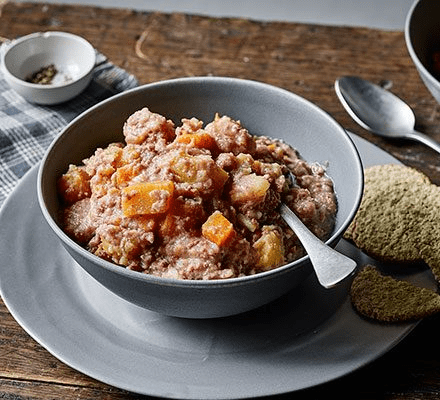
Stovies– The word Stovies means “bits from the stove,” so it is a recipe using whatever you happen to have to hand on a Monday, after your Sunday roast – although you can always use fresh meats, too.
Vegetables (any that you have left-over from the day before)
Salt and pepper
Preheat the oven to 190 C / Gas 5. Place a casserole dish, on the stove over medium heat. Add the lard or dripping, and melt. Add the onions and cook until soft, but not browned – about 5 to 8 minutes. Take care not to burn the onions. If using, add the beer or stout and turn the heat up and allow to boil for 2 minutes to burn the alcohol away. Add the meat and stir well. Add the potatoes in layers, seasoning each layer with salt and pepper as you go, before adding the next layer. Pour over the stock or gravy (or both). Cover with a lid and cook in the preheated oven for 45 to 50 minutes, checking from time to time to make sure the stock is not boiling dry. If it is, add a little extra stock. Ten minutes before the end of cooking, add any leftover vegetables, stir well, and check the seasoning. Cover with the lid and cook for a further 10 minutes. The meat and vegetables will break up to create a thick, hearty stew-like consistency. Be careful not to over boil, as you need to keep chunks of meat and vegetables. Serve the stovies in a deep dish or bowl with rough oatcakes and brown sauce, if you like it.
Variations – Don’t feel that you have to be restricted to the pickings from your Sunday lunch. Stovies can also be made using a tin of corned beef, some cooked minced beef, or sausages:
Corned Beef: Crumble the corned beef and stir through your potatoes 20 minutes before the end of cooking.
Cooked Minced Beef: Stir through the potatoes 20 minutes before the end of cooking.
Sausages: Cook the onions as above. Using 1 pound of sausage, slice thickly then put one layer on the onions, followed by a layer of potatoes. Continue until all used up. Cook as above.
New Year – new look – and an update of why we/you are here.
This cookery blog is a collection of some favourite recipes written at my kitchen table, using ingredients you can find locally and in season. Personally, I love the changes and wouldn’t want to live anywhere other than the UK with all its climate and regional diversities. I look forward to the first asparagus from the farm just around the corner, English strawberries from the local market, the freshest fish from our British waters, field mushrooms from an autumn walk.
With less carbon footprint and more freshness, you will soon understand why eating British and following the months will tickle your tastebuds, save you some pennies and help local economy.
I live in Worcestershire with The Husband, one cat and with visiting children and grandchildren. as and when. In my time, I have been a nurse, made children’s clothes, had a catering company, estate agent and for the last 16 years volunteered, helping with arts and crafts, at a local Hospice. It was there that I was encouraged to start www.ailsacooks4one.com after taking in recipes for those bereaved and having to cook just for themselves. I want to give you the love of cooking I have and the confidence to do so for others.
And, now, I want to get everyone else onboard, following the Seasons!
It wasn’t so long ago that every meal people ate was prepared using seasonal ingredients because there was no means of transporting international produce between countries. People ate as nature intended and their diet was dictated by what grew locally. There really is no sense or benefit in eating fruit, vegetables, meat and fish that have been flown around the world when you can enjoy native ingredients that have been grown, reared or caught a matter of miles from home.
Every time we look at our plates, we should ask ourselves where the food comes from, how it was produced and what it cost – not just in terms of money but also in terms of environmental damage. To entice us to buy fruits and vegetables, supermarkets lay out stacks of perfectly formed specimens, Unfortunately, this means that 20 – 40% of local farm produce is wasted because it isn’t “perfect” enough even though it tastes absolutely fine. It also means that to reduce the risk of blemished produce, the former relies more and more on a range of pesticides and fertilisers to keep food available out of season. The fertilisers also cause massive problems in the environment as soil biodiversity and water course are polluted by the run off from fields.
Locally grown will often cost less, will be fresher, tastier and more nutritious. It will be less damaging to the Earth due to the reduction in energy used to transport far flung places. You will also be supporting farmers and producers in your area and, in turn, helping the local economy.
We can change things for the better by:
accepting “wonky” or less than perfect vegetables and fruit
Grow your own.
Eat by the Season
Spring is traditionally a time of culinary celebration after the Winter months. Fresh green produce, various meats and berries begin to appear. By the Summer the harvest from land and sea is in progress and many fruit and vegetables are plentiful. With the advent of Autumn, there is still much about and will now include wild mushrooms, British apples and pears and nuts. Winter is not the dull culinary season many people think it is with game and winter vegetables that need a touch of frost to bring them to their peak.
January 5th I know it’s a bit of a cliché and perhaps because I am a Scot and brought up in the tradition of Hogmanay but I love New Year’s Day. I see a whole year before me stretching out just waiting to be filled with people and places and happenings! Some will be bad as well as good but I’ll take that for a chance at newness and anticipation for a year to come. And my main resolution this year – to try to cook seasonally – as I hope you will!
Make the best of the month’s offerings with warming soups and casseroles and seasonal cooking will never feel so wholesome.
Anything-you-Have Coconut Curry Soup – the best soup using leftover veg.
1 tablespoon of olive oil
1 chopped onion
1 -2 cloves garlic, smashed
small knob of ginger, grated
1 tablespoon red curry paste
1 tablespoon turmeric
salt to taste
1 dessertspoon sugar
1 14 ounce can of coconut milk
1 pint vegetable stock (from a cube will do)
the fun part – any vegetables you have in the house! You can add:
Heat the oil in a large pot over a medium heat. Add the onion, garlic and ginger and stir fry for a few minutes. Add the curry paste, turmeric, salt and sugar. Stir fry again to combine. Add the coconut milk and stock – and whatever lost vegetables you have found! Simmer until soft, blend to silky smooth and serve with some crispy fried onions and/or coriander on top.
This is obviously going to make more than more portion – but it will keep in a pot in the fridge for about a week – or you can freeze it in your own sized portions!
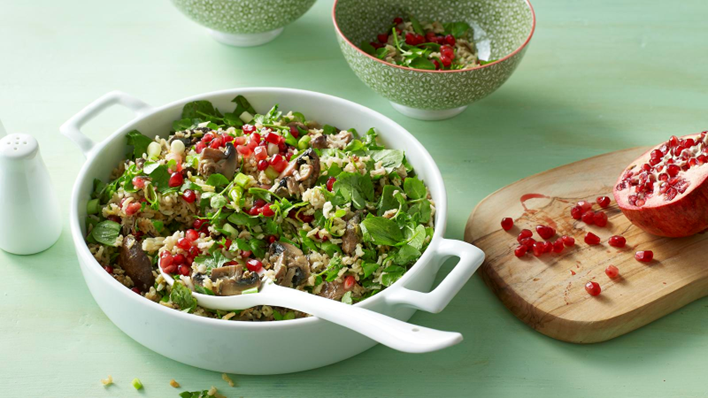
AS we head towards the time when we turn the clocks back and Autumn seems to be rain and cold and grey, try to remember the foods of summer, their freshness and greeness. Whilst the weather often dictates that stews and comfort food are what we want/need to eat, don’t forget winter salads – but with a hint of warmth to keep out the chill. You can eat them on their own – but they will easily sit happily alongside lamb or pork chops or baked fish – and give you a quick boost of Vitamin C and all things sunshine!
75 – 100g mix of brown basmati and wild rice, cooked (you could use one of theready made pouches )
200ml hot vegetable stock
1 pomegranate, seeds only
3 – 6 spring onions, finely chopped
50g watercress, roughly chopped
1 tbsp extra virgin olive oil
fresh coriander, roughly chopped
1 tbsp lemon juice
Salt and pepper
Preheat the oven to 200C/180C Fan/Gas 6. Place the mushrooms, onion, garlic, lemon zest, rice and vegetable stock in a casserole dish or small, deep roasting tin. Cover tightly with kitchen foil or a lid and cook for 1 hour.
Meanwhile, to make the lemon and coriander dressing, mix all the ingredients together in a small bowl. Set aside. Stir the dressing, half the pomegranate seeds, half the spring onions and the watercress into the rice. Taste and adjust the seasoning, if needed. Garnish with the remaining pomegranate seeds and spring onions. Serve immediately.
small can of water chestnuts, drained and halved (you can freeze what you don’tneed for another time)
1 red chilli
1 garlic clove
Add chopped mushrooms (raw), sliced peppers, radishes, cashew nuts, coriander, sliced cabbage, seeds of your choice
Dressing:
1 tablespoon sesame oil
1 tablespoon vegetable/sunflower oil
1/2 teaspoon grated ginger
1 teaspoon castor sugar
1 dessertspoon sherry vinegar
1 tablespoon soy sauce
2 tablespoons water
Deseed and finely chop chilli; peel and slice garlic. Heat the oil and fry the chilli, garlic and ginger for 30 seconds. Add the sugar, vinegar, soy sauce and water and simmer for 1 minute. Remove from heat and cool. Put all the salad ingredients in a large bowl. Add the dressing and toss well. Serve at once with a scattering of sesame seeds
Try topping with Crispy Noodles (soak half a sheet of dried Chinese egg thread noodles, drain and dry thoroughly. Heat some oil in a deep pan and deep fry the noodles for 1 -2 minutes until crisp and golden.
Pear Salad
3 Tablespoon extra-virgin olive oil, divided
2 pears, quartered lengthwise and cored
salt
Freshly ground black pepper
2 Tablespoon apple cider vinegar or sherry vinegar, divided
2 tsp. honey
1 /2 head of a romaine or other crispy lettuce, torn into bite-sized pieces
crumbled blue cheese or feta
seeds and/or walnuts (optional)
In a large pan, over medium-high heat, heat 1 tablespoon oil until just smoking. Add pears in a single layer cut side down and cook, flipping halfway through, until golden brown on both cut sides, 4 to 6 minutes total; season with salt and pepper. Reduce the heat to low and add 1/2 tablespoon vinegar. Gently stir until liquid is thickened and coats pears, 1 to 2 minutes. Transfer pears to a plate and let cool. Halve each piece of pear lengthwise.
In a large bowl, whisk honey and remaining oil and vinegar; season with salt and pepper. Fold in greens, gently tossing to combine. Top with pear slices and blue cheese. You can also add your favourite seeds and/or walnuts.
You are probably, like me, in the middle of a tomato glut. Why do tomatoes all become ripe at the same time? And, also, what about the ones which never turn red? All the hard work of growing, looking after and nurturing them to end up with almost too many of the little red bombs! What can you do with them once you’ve made gallons of soup and tomato sauce for the freezer, eaten them fresh, fried and baked and given away pounds (very useful for bartering, though, for things you might not have grown)?
The flavour depends largely upon the variety and how the fruit has been grown and ripened: some cheap imported tomatoes are grown under polytunnels, picked under-ripe, then artificially ripened with ethylene gas, a plant hormone. Sun-warmed tomatoes picked straight from the vine are arguably the ideal way to enjoy tomatoes.
When choosing tomatoes, pick them up, feel them and smell them. Choose tomatoes that feel heavy for their size; they are more likely to be bursting with juices. Tomatoes with no smell will probably have no flavour, so opt for those with a pleasant aroma (although the aroma released by tomatoes on the vine are usually due more to the vine than the tomatoes themselves).
The Husband makes a spicy special salsa with tomatoes and a secret ingredient he keeps very close to his heart so I’m afraid I can’t give you that recipe but I hope you will try below for something a little different – and one for all those toms who simply refuse to turn colour!
Tomato and plum might sound like a questionable salad combination to some, but just give this recipe a try and I think you’ll be convinced. Totally tasty and perfect – and possibly also using up the other glut of the month – plums!
Tomato and Plum Salad
400g tomatoes, cut into wedges
2 red plums cut into wedges
Finely grated zest of 1/2 a lemon
1 tsp red wine vinegar
1 tbs extra virgin olive oil
1/4 tsp sumac (a citrusy Middle Eastern Spice)
1/4 bunch tarragon, leaves picked, torn
Combine tomatoes, plums, lemon zest and salt flakes to taste in a bowl and set aside for 5 minutes to marinate. Add vinegar, oil, sumac and three-quarters tarragon. Toss until well combined. Spread salad across a serving platter, scatter with remaining tarragon and serve immediately.
This sweet Tomato Jam is given a nice kick by the addition of ginger.
2 tablespoons sunflower oil
2 tablespoons grated ginger
1 red onion, finely chopped
1/2 cup (125ml) red wine vinegar
1/2 firmly packed (100g) brown sugar
1 small red chilli, finely chopped
450g chopped tomatoes
1 tablespoon honey
Heat the oil in a saucepan over medium-high heat. Add the ginger and onion, and cook for 2-3 minutes until the onion is soft. Add the vinegar, brown sugar and chilli, and cook, stirring, for 2-3 minutes until sugar dissolves. Stir in the tomatoes and season with salt and pepper. Bring to the boil, then reduce the heat to low and simmer, stirring occasionally, for 30-35 minutes until thick. Stir in the honey and cool to room temperature.
This last recipe is for the ubiquitous green tomatoes – but is so good that if I were you I wouldn’t wait for the end of the season but just use them when you have them, even if early on! Slice them thickly, dip into beaten egg, fine polenta and fry in rapeseed oil till crisp. The insides soften and have a delicious stab of sharpness to them and benefit further from a bowl of garlicky mayonnaise on the side. If you haven’t got polenta, you can use flour, breadcrumbs or a thin batter instead.
Fried green tomatoes with garlic mayonnaise
There is something quite perfect about the green-apple tang of an unripe tomato with the warm, mealy notes of crisp polenta. This recipe is good with any under-ripe tomatoes. Just squirt a little lemon juice on each one as you slice. Serves two.
4 medium to large green tomatoes
2 eggs
A little milk
90g plain flour
3 tablespoons fine ground polenta )cornmeal)
2 sprigs of thyme (optional)
Oil for frying
Slice the tomatoes thickly, about three or four from each fruit. Break the eggs into a small, shallow bowl and beat them lightly. Stir in a tablespoon or two of milk. Mix the flour and ground polenta, season with salt and black pepper and the leaves pulled from the thyme branches. Tip onto a large shallow plate. Press a slice of tomato into the flour and polenta mixture then into the beaten egg then back into the polenta again. Shake off any excess. Don’t worry if bits of tomato show through here and there, you want a light, crisp coat, not armour-plating. Repeat with the remaining tomatoes. Warm the oil in a frying pan. Lower some the tomatoes into the pan, one at a time – otherwise they will stick together- then let them colour lightly on both sides. I turn mine after a minute or two. Cornmeal burns quickly, so I keep a watchful eye on the tomatoes as they cook. They should be ready in four or five minutes. Remove from the pan and drain on kitchen paper. Serve with garlic mayonnaise.
When I was little, I used to go blackberry picking with my mum – and I, in turn, took my own children with my friends, Claire and Beryl, and their children. Our babies have got babies of their own now and we hope to all go picking again this week – trying to persuade little fingers to put as many of the berries they put in their mouths into their baskets! Our garden is partly an old orchard where the apple trees have fallen down (we have also planted new ones!) and become a secret hiding place for rabbits, squirrels and mice and the trunks homes for woodpeckers and robins. And over it all, has grown the most wonderful blackberry bush, its huge, thorny branches weighed down with all the glistening, purple gorgeousness of fruit!
There are so many things you can do with blackberries – jams, cordials, puddings and savoury sauces – and, of course, you can just freeze them for later and eat every morning with porridge (me) and yogurt (the husband) for a dose of vitamin C throughout the winter. They are free, picking gets you out in the fresh air and it’s a time to spend with friends, chatting away as you do, as we have done for years behind years!
Overnight Oats and Blackberries
1 cup fresh ripe blackberries (plus a few for topping)
1/2 banana (save the remainder for the topping)
200 mls milk
½ tsp vanilla extract
½ cup oats (I like the organic jumbo ones best)
Topping: slices of banana and extra blackberries
Put the blackberries, banana, milk and vanilla in a blender and blend until completely smooth. Pour into a bowl or glass jar and stir in the oats. Cover the bowl or jar and place in the refrigerator overnight to allow the oats to soak and soften. In the morning add some fresh blackberries and the other half of the banana (sliced) on top (for those with a sweet tooth, add a drizzle of honey or maple syrup.
Blackberry Salad
baby spinach/ watercress/ rocket leaves (or a mixture if you have it)
fresh blackberries
crumbled gorgonzola or blue cheese
walnut pieces (optional)
citrus vinaigrette (recipe below)
1/3 cup good-quality olive oil
1/4 cup freshly-squeezed orange, lemon, or lime juice
1 tsp. salt
1/2 tsp. freshly ground black pepper
Whisk together all the vinaigrette ingredients. Toss the leaves and blackberries together with the vinaigrette and serve topped with crumbled cheese. It will look so beautiful with the light green leaves and purple blackberries, you will be loathe to eat it – but do!
Blackberry Fridge Jam (as the name implies, you keep this in the fridge once made. It has half the amount of sugar normally used so better for you. I put it into small jars so that I am opening and using quickly. You can even put the whole jar in the freezer and take out when needed.)
Weigh however many blackberries you have and put in a bowl. Weigh out half that weight in preserving sugar and add to the bowl. Mash the fruit up slightly and leave aside for no less than an hour. Put into a saucepan (you can at this point add a tablespoon of cassis if you like/have), bring to the boil and stir a rolling boil for exactly 5 minutes. Allow to cool and put into sterilised jars.
Put the blackberries in a saucepan with the elderflower cordial, caster sugar and fresh mint sprigs. Set the pan over a medium heat and gently bubble the mixture for 10-15 minutes until the berries soften and release their juices, then reduce to a thick coulis. Remove from the heat and let it cool a little, then taste, adding more sugar or a dash more cordial if needed. Remove the mint sprigs. Allow the mixture to cool completely (it will become more like jam in consistency). Pour the double cream into a large bowl then, using an electric mixer, whisk to soft-medium peaks. Stir in the Greek yogurt, then fold in the cooled blackberry coulis, creating a swirled effect. Spoon the fool into a dish and serve straightaway, or cover and chill for up to 6 hours.
The arrival of swallows and so many good things grown or reared locally! I love May with all its promise of Summer to come and everything fresh and newly green! It’s also the time for British asparagus and Jersey Royal potatoes. The potatoes have been grown on the island for 140 years and today there are approximately 20 island farmers who grow them (and often no other crops) on approximately 7,300 acres and can only be grown on Jersey to have the name. As for the asparagus, I am very lucky to live in the Valley of Evesham, one of the homes of British asparagus. I know you can buy this most of the year from abroad – but there is nothing like the Real Thing from just around the corner! This first recipe is using these two British stalwarts – but with a twist!
Coconut Potato Bowl with Lime and Ginger (I’m not giving you exact amounts here – just use how ever much you need to feed how many people!
Jersey Royal potatoes, roughly chopped
cauliflower florets
Coconut oil, melted, enough to coat
Sea salt and pepper
asparagus
olive oil
cherry tomatoes, halved
spring onion, sliced
Baby broad beans
Sliced cooked beetroot
coconut flakes, toasted, to garnish
Dressing: 2 tbsp olive oil finely grated zest and juice of a lime grated ginger
Preheat the oven to 200C/fan 180C/gas mark 6. Place the potatoes and cauliflower florets in a roasting tray, drizzle over the coconut oil and toss to coat. Sprinkle with sea salt and pepper and roast for 30 minutes until tender and beginning to brown. In the meantime, prepare everything else; brush the asparagus with some olive oil, heat a griddle pan until hot and cook the stems until charred and tender. Set aside. For the dressing, whisk together the olive oil and lime juice, then stir in the zest and ginger and season with some salt and pepper. To assemble, arrange the potatoes and cauliflower to one side and place the other ingredients round the bowl (or how you prefer), drizzle with the dressing and scatter over the coconut flakes, or serve on the side.
Crispy Oregano Jersey Royals with creamy feta sauce
250g Jersey Royals, halved or quartered if large
1/2 lemon, halved
1 cloves garlic, smashed
20g oregano, chopped
20ml, plus 60ml extra virgin olive oil
Salt and pepper
40g mixed chopped herbs, basil, dill or parsley
1/2 tsp honey
Sesame seeds
Feta Sauce
50g feta cheese
20g cream cheese, room temperature
1 tbsp lemon juice
Pinch of smoked paprika
Pinch of chili flakes
Preheat the oven to 220 degrees Celsius
On a baking sheet, toss the Jersey Royals, lemon wedges, garlic and oregano with 40ml olive oil. Season with salt and pepper. Roast for 20 minutes, or until tender. Remove the Jersey Royals from the oven. Remove the charred lemon and garlic from the baking sheet. Return the pan to the oven for 20-25 more minutes until crispy.
Herb oil, finely chop the roasted lemon wedges – rind and all. Chop/mash the garlic into a paste. Add the garlic and lemon to a bowl along with 30ml olive oil, mixed herbs and the honey. Season with salt, pepper and chili flakes
Feta sauce, combine the feta, cream cheese and lemon juice in a blender until creamy. If desired, thin with additional lemon juice.
Asparagus Soup – this will make more than for one – but I will allow you to batch cook and freeze on this occasion as the season is relatively short for British Asparagus!
rustic bread (preferably sourdough), to serve (optional)
Heat the butter and oil in a large saucepan until foaming. Fry the asparagus tips for a few mins to soften. Remove and set aside. Add the shallots, asparagus stalks and garlic, and cook for 5-10 mins until softened but still bright. Stir through the spinach, pour over the stock, bring to the boil, then blitz with a hand blender. Season generously and add hot water to loosen if needed. Ladle into bowls and scatter the asparagus tips over each. Drizzle with olive oil and serve with some nice crusty bread.
CRAB AND ASPARAGUS WITH THAI MAYONNAISE – again, the amount of asparagus and crab is up to you.
Asparagus spears
crab meat
sliced sourdough bread
olive oil
handful of rocket leaves or spinach
2 – 4 tablespoons of good mayonnaise
1 garlic clove, peeled and crushed
1/2 – 1 red chilli
freshly grated zest of 1lime
1 tablespoon fish sauce (if this is the first time you have used it please don’t be put off by the smell – it tastes much better!)
chopped coriander
Cook the asparagus in boiling water for 2 – 4 minutes, drain and refresh under cold running water. Stir the garlic, chilli, zest, fish sauce and coriander into the mayonnaise. Season, if necessary, fold in the crab meat and set aside. Toast the bread, drizzle with olive oil and scatter over rocket or spinach leaves. Pile the crab mixture on top. Toss the cold asparagus spears in a little olive oil and arrange over the crab meat.
Alternatively, you could cook LOTS of asparagus and serve, on the side, hot with lashings butter – using any leftover toast to soak up the juices!
Where does the time go? I can’t believe its over a month since I last posted but when I look back, what have I actually done in that time? Birthdays, trips and family times – nothing of great note to anyone else but me. My happy life – which isn’t the same for everyone, I know. However, today is an extra day to the year- 29th February, so I would like you to use it wisely – on yourself!
Light a candle (the one you bought but have been saving for a ‘special occasion’) read your book (give yourself time to read that extra chapter) or take yourself off on a stroll (walking that route you never take because although it’s beautiful, it always takes a littlebit too long) And most importantly, cook something unctuous and delicious (a recipe that requires a bit of time and patience) with a sweet little something at the end.
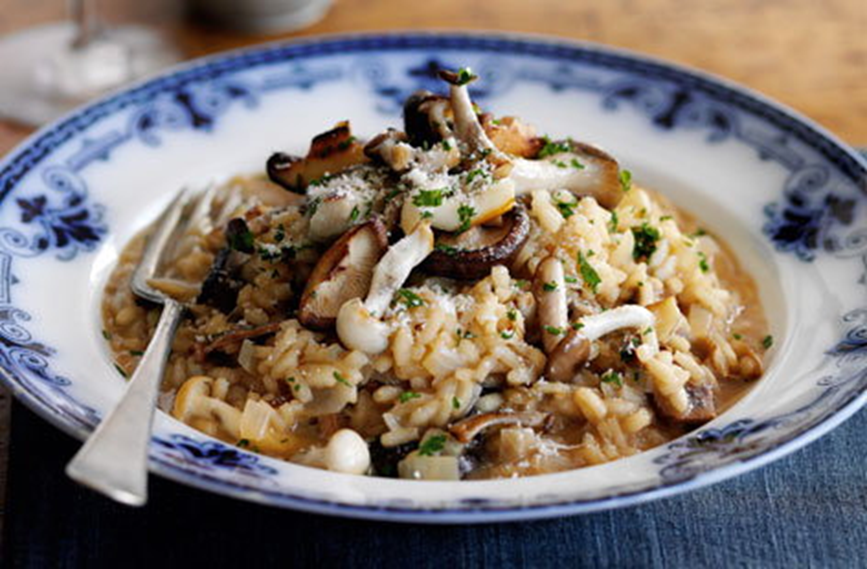
Mushroom risotto
1 handful of chestnut mushrooms
OPTIONAL dried porcini mushrooms
1 stick celery – finely diced – and keep the leaves for garnish
1 white onion, finely diced
1 clove of garlic, crushed
100g risotto rice
Splash of white wine (save a glass for yourself)
300ml stock (chicken/vegetable, whatever takes your fancy)
Parmesan cheese
Knob of butter (cold, to be stirred in right at the end)
OPTIONAL glug of Worcestershire sauce or mushroom ketchup
Make your stock and pop the porcini mushrooms in, if you have them, and keep it warm. Fry the onion, garlic and celery in a large saucepan with a little bit of butter and olive oil until soft (ideally ten minutes, very low heat). Pour the risotto rice in and, stirring often, let the rice soak up some of the oil and butter. Once the rice starts to stick a bit, pour in the white wine, let that bubble away as the rice soaks it up before slowly adding a ladle-full of stock in. Continue this way, allowing the rice to soak up the liquid, between each ladle full, until the rice is soft but still a little bit chewy and moist. You’re almost teasingly feeding it liquid ladle-full by ladle-full – just as it has drunk up one, the next goes in. Take it off the heat once all the stock has been used, and grate in the parmesan, stirring it round so it melts into the risotto. Finally, add some seasoning and a lump of cold butter and let it ooze in and cover the pan for a few impatient minutes. It should still just be moist – the Italians spoon it onto a plate and jiggle the plate around in circular motions to allow the risotto to rest in an even flat disc, so it must still retain some moisture and ooziness to do this. Scatter the celery leaves on top as a garnish – it’s tasty, nutritious and shouldn’t be wasted!
Chocolate Mousse (this will give you more than one portion but it’s impossible to half an egg – and there’s always tomorrow!)
100 grams dark chocolate
1/4 pint single cream (if you’ve only got double use half cream and half milk)
1 egg yolk (put the white in a carton in the freezer – when you have enough you can make meringues or coconut pyramids)
Break up the chocolate into a bowl. Put the cream into a saucepan and bring to the boil for few seconds. Pour over the chocolate and stir till blended. Beat in the yolk and pour into a small dish. Put in the fridge to set and serve with some more grated chocolate and cream.
I am a Scot (albeit with an English mother) who has lived here since the mid seventies and whilst I am very happy here there are two things which always take me back to my roots and like to celebrate – Hogmanay and Burns Night. The former has no particular culinary history (other than clootie dumpling and black bun (another story), a lot of alcohol and emotional singing of Auld Lang Syne). The latter, of course, has the Burns Supper. Haggis, neeps (why do you English call the orange veg swede and the wee white ones turnips when everyone knows in Scotland it’s the other way round? ) and tatties are a given and can really only be served one way – but you may not know the following 2 recipes – and which can be eaten any time of the year.
Cullen Skink – a hearty soup made from leeks, onions, potatoes and smoked haddock
50 grams butter
1 small onion and 1 small leek, finely chopped
2 medium potatoes, peeled and cut into cubes
150 mls water
200g (ish) smoked haddock
200 mls milk
Melt butter in a saucepan, add onion and leek and cook for about 5 minutes without browning. Add potatoes and cook till soft. In another pan cover the haddock with the milk and cook gently till tender (you can also do this in the microwave).Remove from milk when cool and and flake gently into large pieces, removing bones. Drain the potatoes (keeping the water), take out some of them with some leeks and onions and mash the rest. Return the vegetables to the pan with the liquid and add the milk and haddock. You may need more liquid – you can add some more milk, white wine and/or cream or creme fraiche – whichever takes your fancy! You can also add some chopped parsley and/or chives for a bit of colour. Serve with lots of crusty bread to mop up!
Now for the pudding : Cranachan – a delicous mix of raspberries, cream, whisky, honey and toasted oats. What’s not to like?
50 grams porridge oats
small pot of double cream
2 – 3 tablespoons honey to taste
2 tablespspoons whisky (I personally hate whisky but somehow can take it here!)
raspberries – fresh or frozen
Heat a heavy based frying pan up and toast the oats until nutty and pale brown (I sometimes add a little demerara sugar so they caramelize but you do have to keep moving them around!). Put to one side to cool. Whip the cream till soft peaks and fold in the honey and whisky. Layer up the cream, raspberries and oats and eat immediately whilst the oats are still crunchy!
The end of the year in sight and Christmas a-calling. Its my favourite part of the year – not for the presents and parties (though I do like them, too) but for family and being together with the ones you love. I know it isn’t the same for everyone – some of you will be facing a time on your own; some will be worrying how to get through it both financially and emotionally. Pick your self a little treat – a good book (go to the library), your favourite food – be it chocolate, curry or a good cheese – meet up with a friend for a walk, telephone the one you’ve always meant to but not got round to. And give – of yourself as a friend, of time as a volunteer to a charity or cause – or in actual little gifts like the ones below that you have made yourself. Let the recipients know that in the time of making, you were thinking of them. And you will find a whole lot of love back.
CHRISTMAS JAM
350g cranberries
350g bramley apples, peeled and chopped
1 orange
1 tbsp freshly grated ginger
1 tsp ground cinnamon
1 tsp ground cloves
500g granulated sugar
15g butter
Put the cranberries and apple pieces in a large, heavy-based pan. Add the orange zest and juice along with the ginger, cinnamon and cloves. Cover the pan with a well-fitting lid and set over a low heat. Cook for 10 mins, swirling the pan from time to time, but not stirring. Remove the lid and add the sugar, stirring with a wooden spoon until the sugar has fully dissolved. Bring to a rolling boil and cook for about 10 mins. If you have a jam thermometer, the mixture should reach 104C. Alternatively, remove the pan from the heat and spoon a little of the jam onto one of the chilled plates. Leave for 1-2 mins, then push the jam gently with a fingertip to see if it has set enough to wrinkle. If it doesn’t, continue to boil for a few more minutes then test again. Remove from the heat and stir in the butter. Let stand for 10 mins before pouring it into the sterilised jars. Seal and label.
White chocolate Rocky Road
600g white chocolate, chopped
250g mixed marshmallows, chopped
2/3 cup (100g) dried cranberries
2/3 cup (100g) pistachios, chopped
80g macadamias, lightly toasted, chopped
1/2 cup (45g) desiccated coconut
250g pink Turkish delight, chopped
Grease a 20cm square cake pan and line the base and sides with baking paper, leaving some overhanging. Place chocolate in a bowl set over a saucepan of simmering water (don’t let the bowl touch the water) and stir until melted. Cool slightly, then fold in all remaining ingredients. Spread into the prepared pan and chill for 2 hours or until set. Use the baking paper to lift the rocky road out of the pan, then slice into squares to serve.
SPICED APPLE TEA MIX
2 tablespoon loose green tea
2 tablespoon snipped crystallized ginger
1 teaspoon whole allspice
1 teaspoon whole cloves
6 crisp dried apple chips* or dried apple slices
6 3-inch cinnamon sticks
In a small bowl combine tea, crystallized ginger, allspice, and cloves. Divide tea mixture and dried apple chips among six paper tea filters. Tie tops of filters with kitchen string, tying a cinnamon stick at the top of each. Place filled tea filters inside six decorative heat-proof cups. Attach directions for serving.
To make Spiced Apple Tea: Add 6 to 8 ounces hot water to filled tea filter in each cup. Let tea steep for 3 to 5 minutes. Remove and discard tea filter.
Quick Spiced Vinegar
50mm stick of cinnamon
1 teaspoon cloves
2 teaspoons allspice
1 teaspoon black peppercorns
1 teaspoon mustard seed
2 – 3 bay leaves
1.1 litres vinegar
Tie the spices into a muslin bag and put it with the vinegar into a heatrproof basin and stand over a saucepan of hot water. Cover the basin with a lid or plate so the flavour is not lost. Bring the water in the pan to the boil and remove it from the heat. Set aside for 2 – 3 hours to allow the spices to steep in the warm vinegar. Strain and cool, put in some pretty bottles and label.
The world’s favourite root vegetable, the potato comes in innumerable varieties. Shapes vary from small (‘finger’) potatoes like Anya to large, round types like the King Edward. Most have pale brown skins and cream or yellow flesh, but some speciality varieties are differently coloured. ‘Waxy’ potatoes such as Charlotte are great used in salads, while ‘floury’ potatoes such as Maris Piper are ideal for mash and baking.
Older potatoes should be scrubbed well in cold water, and any eyes dug out with the tip of a peeler or a small, sharp knife. Much of the nutritional content is stored in or just under the skin, so leave it on if possible. Otherwise, peel very thinly with a potato peeler, then rinse. New potatoes just need a scrub in cold water – the skin is too thin to warrant peeling.
Keep all potatoes in a cool, dark, well-ventilated place as, if exposed to light, they’ll sprout green shoots. They should be kept in paper, rather than plastic bags, as the latter will make them go mouldy. Stored this way, old potatoes can last weeks, while new potatoes should last for a good few days.
Potatoes – you can do so much with them – boil them, roast them, bake them, mash them – even make cakes with them! The ultimate comfort (and cheap!) food so I thought I would give you some suggestions for something new to do with them.
Black Pudding and Cheese Hash Browns – makes 4
500g potatoes
1 teasp chopped chives
1 teasp chopped parsley
1 egg white
125g cheese
4 slices of black pudding – if you don’t like this, you could omit or add some sliced sausage
Boil potatoes in their skins till just soft. Grate them into a bowl and mix in the chopped herbs. Add a pinch of salt to the egg white, beat lightly with a fork to loosen and mix with the grated potato. Divide mixture into four. Pat out each one into a circle slight larger than the pudding. Put a slice of pudding in the middle topped with a slice of cheese. Fold and shape the potatoes over the stuffing so it is fully enclosed. Shallow fry until golden. Top with a poached egg to serve.
Baked Potato with Smoked Haddock and Mustard – serves 1 so just double up as recquired
1 large baking potato 150g smoked haddock 100 ml double cream
1 tablespoon grain mustard chopped parsley
Put the smoked haddock in a shallow baking dish. Season the cream with mustard and parsley and a little salt and pepper and pour over the haddock. Bake in the same oven as the potato – about 20 mins. Break open the potato and scrape into a bowl and return the empty skins to the oven to crisp. Mash potato with the cream from the haddock. Flake the fish and stir into the creamed potato. Pile back into the skins and place briefly under the grill to brown.
Warm potato, spinach and parmesan salad
250g waxy potatoes
2 tablespoons balsamic vinegar
juice of a lemon
1 heaped tablespoon Dijon mustard
6 tablespoons olive oil
lump of parmesan
4 rashers streaky bacon
3 – 4 handfuls of spinach leaves
Lower the potatoes into boiling water and cook till tender. Drain and slice thickly. Whizz the vinegar, lemon juice and olive oil with 2 heaped tablespoons of grated parmesan. Fry the bacon till crisp and cut into small strips Put the spinach in a bowl and the warm potatoes and bacon and toss lightly in the dressing.
Tattie scones are similar to potato pancakes. From my Scottish background, these scones are the perfect side with any breakfast meal and are a family favourite! Add onion, pepper, or any other spices for flavour.
450g cooked potatoes
110g self-rising flour
55g butter
½ pinch salt
Mash potatoes with flour, butter, and salt in a large bowl until a stiff dough forms. Heat a lightly greased griddle or cast iron skillet over medium-high heat. Turn dough out onto a lightly floured work surface. Knead dough lightly and roll dough out to a 1/2-inch-thick circle. Cut into 6 equal wedges. Working in batches, cook scones on the hot griddle until golden brown, 4 to 5 minutes per side.
Sweet potato cake
200 g butter, at room temperature + extra for greasing
500g sweet potato
200 g fine caster sugar
4 eggs, at room temperature
250 g flour
2 tsp baking powder
1 tsp cinnamon
1 tsp five spice powder
1 pinch of salt
Preheat the oven to 160 °C. Grease the cake tin and line with baking paper. Peel the sweet potatoes and cut into equal sized pieces. Cook in boiling water for about 15 minutes until tender. Drain and mash with the hand blender. Leave to cool to room temperature. Beat the butter with the sugar using the mixer for 5 minutes until light and airy. Add the eggs one by one. Beat well. Only add the next egg when the previous egg has been fully incorporated. Sieve the flour with the baking powder, cinnamon, five-spice powder and salt above the dough. Mix through as lightly as possible. Gently spoon the cooled mashed sweet potatoes through the mixture. Spoon the cake mixture into the cake tin. Bake the cake in the middle of the oven for about 65 minutes until golden brown and cooked. Use a skewer to check if the cake is done. Insert it into the middle of the cake. If it comes out clean and dry, the cake is baked. Leave the cake to cool on a wire tray for approx. 20 minutes. Turn out of the tin and allow to cool completely.
Beat the softened butter to a soft and even consistency. Add the orange juice, if using, then the icing sugar. Cream until you have a smooth, soft buttercream consistency. Add the cream cheese and work it in – don’t beat it in, just slowly mix with a wooden spoon. Depending on how soft the mixture is, you may want to put it in the fridge for 10 mins at this point. If it’s runny, it will firm up again. It should be spreadable and not run off the cake.