Time for Thai

At long last – we have SUN!  After a week of torrential rain, finally some golden rays!  Of course, it has also meant some busy time in the garden and with my vegetable patch – such a shame that the rain needed to make the veggies grow also makes the weeds! The hens and I have been out digging and hoeing (as soon as they see the spade they are with me knowing a good feed of  worms is coming) and everything looks a little back in control again.

In the past week when it was too wet to go out, I was having a bit of a declutter and came across an old metal steamer of my mum’s.  It is battered and lost its lid but couldn’t bring myself to throw it out so I asked around for some suggestions.  Don’t know why I never thought of it but, because as it already has holes in it, the main one was for a planter!  I have a herb garden in pots (no weeding and no running into each other) outside but I thought I could use it for my favourite herbs, coriander, parsley and tarragon – and this is the result, painted and decoupaged, to sit on the kitchen window sill.

Image may contain: indoor

Image may contain: plant, tree, outdoor and nature


This is a very long winded way of leading you into this week’s recipe but because of the heady scent of coriander now permeating the kitchen and because of the sunlight filtering through the window, I thought of Thai fishcakes – a nice light meal for the weather and easy to do so you can go outside and enjoy it.  You’ve probably got lots of recipes for these cakes but I do hope you will give my version a go too!

THAI FISH CAKES WITH A DIPPING SAUCE

  • 1 tablespoon red thai curry paste (yes, I know you can make your own but when there are so many good ones in jars, honestly, why bother?)
  •  1 small egg
  • 150g cod cut into chunks
  •  1 tablespoon thai fish sauce (don’t worry if you have to buy a bottle specially for this as it lasts for ages and we will use it again )
  •  1/2 teaspoon sugar
  • 1 tablespoon cornflour
  • 1 -2 kaffir lime leaves, chopped (you can buy these fresh, dried or frozen)
  •  1/2 dozen fine green beans, chopped
  •  oil for deep frying

Beat the curry paste, egg and fish until smooth.  Place in a bowl and combine with the rest of the ingredients.  Shape into little cakes and deep-fry  for 4 – 5 minutes until golden and drain on kitchen paper.

DIPPING SAUCE  Bring 30 ml of water to the boil with 50 ml of rice vinegar and 25g sugar. Stir until the sugar dissolves and cool.  Add 1/2 cucumber, peeled and chopped, 1 garlic clove, crushed, 2 shallots, finely chopped and some grated ginger to taste.

Serve the cakes on watercress and/or spinach or stir fry some pak choi with beansprouts, sauce on the side.

Summer of Rain

acquacotta_tuscany_angle


I know some of you read this blog are abroad so you probably won’t know that this past week as been an absolute washout – literally!  My beautiful roses are windswept and starting to rot; the hens’ feathers are plastered to their shivering bodies as they squelch their way through the mud in their run; the river at the bottom of the garden is starting to flood over the field – and we’ve even go some heating on in the evening! Thus, instead of giving you light recipes to keep you cool, I’m going back to a soup to keep you warm and give you comfort!  It is, however, of an Italian rustic background – so when eating it I want you to take yourself to a sun drenched trattoria, under a beautiful blue sky, lapping seawater onto a quiet beach . . . .  I’m sure you have the picture now!  I want you to think sunshine in a bowl . . .

ACQUACOTTA SOUP

  • 1 tablespoon olive oil
  • 2 stalks of celery
  • 2 medium carrots
  • 1 small red onion, chopped
  • 2 cloves garlic, chopped
  • 2 sprigs of thyme
  • 500 ml chicken or vegetable stock (from a cube will do )
  • 2 tablespoons tomato puree
  • 4 large plum tomatoes
  • 1/2 tin cannellini beans
  •  1 egg, per portion
  • 3 – 4 slices stale (yes, stale!) bread – ciabatta if you have it (you could just buy a ciabetta roll or two)/baguette ends/anything crusty at the bottom of your breadbin)
  • 1-2 tablespoons parsley, chopped

Heat the olive oil in a large saucepan and gently fry the celery, carrots, onion, garlic, thyme and tomato puree until softened.  Add some stock and continue cooking for 5 minutes. Stir in the tomatoes and cook slowly until they start to break down, add the rest of the stock and bring to a gentle simmer. Add cannellini beans and cook on a low heat (gently – you don’t want to end up like mexican re-fried beans!).  In another saucepan, poach your egg (s).  Add the parsley and mix in the torn (this is rustic and doesn’t call for precisely cut!) bread.  Ladle into a (comfortingly large) bowl and top with the poached egg – and a sprinkling of shaved parmesan, if liked.

You could also add pieces of chorizo or chicken / spinach / basil leaves / oregano – go on, have a play – there isn’t much else to do in this weather!

PS apologies for no posts lately but I’ve just got a beautiful PC which my website wasn’t recognising and couldn’t get on to write!  Obviously it is up and running now and, hopefully, next week onwards normal service will be resumed – including the sunshine!


A perfect marriage

asparagus

You would be forgiven in thinking I don’t really like being at home as it seems as if recently it’s been a case of new week, new place away!  Nothing could be further from the truth – even though I have to say that last week found us in Norfolk! We have been before and loved it and promised we would go back to those wide open skies and coasts so when friends of ours said they were staying over there for a week we jumped at the chance of joining them – even if only for a couple of days in the end.  (poor Pookie Cat has not been well but glad to say seems more like her old self).  There is an abundance of fish, particularly shellfish  to be found there; from whelk and cockle stalls to sesaside restaurants serving fresh crab and lobster. It’s also the season, both here and there, for asparagus (I know you can get it year round in supermarkets from all over the world but nothing tastes better than home grown British!).  With these 2 ingredients in mind – plus my love of all things Thai – here is a twist incorporating all!

CRAB AND ASPARAGUS WITH THAI MAYONNAISE

  • 4 Asparagus spears ) this recipe is still for one but obviously you can increase
  • 125g crab meat        ) these amounts depending on how much you love them!
  • large slice of sourdough bread
  • olive oil
  • handful of rocket leaves (as you may know I eat spinach nearly every day so you could use this instead)
  • 2 tablespoons of good mayonnaise
  • 1 garlic clove, peeled and crushed
  • 1/4 – 1/2 red chilli
  • freshly grated zest of 1/2 lime
  • 1 tablespoon fish sauce (if this is the first time you have used it please don’t be put off by the smell – it tastes much better!)
  • 1 tablespoon chopped coriander

Cook the asparagus in boiling water for 2 – 4 minutes, drain and refresh under cold running water. Stir the garlic, chilli, zest, fish sauce and coriander into the mayonnaise.  Season if necessary, fold in the crab meat and set aside.  Toast the bread, drizzle with olive oil and scatter over rocket or spinach leaves. Pile the crab mixture on top. Toss the cold asparagus spears in a little olive oil and arrange over the crab meat.

Alternatively, you could cook LOTS of  asparagus and serve, on the side,  hot with lashings butter – using any left over toast to soak up the juices.

20190526_070232

Feeling better (she is 19 after all!)


A Taste of Scotland

John and I have been away driving the NC500 which is a 500 mile circular trip from Inverness to Inverness, west, top and east of Scotland.  With some additional visits to Wales, my brother in Ayrshire, meeting up with a friend on the Crinan Canal, a visit to Skye and a stay on the Lake of Menteith in the Trossachs plus getting there from home and back, the speedometer clicked on to 2001 miles as we turned into our drive, 2 weeks later! I could write a whole new blog on our trip – the places we went to, the people we met, food we ate and things we did – but as this is supposed to be a cooking blog, we better stick to the plan – unless anyone wants to know anymore!

Obviously, touring around the Scottish coastline, we ate lots of fish (although I have to say we were surprised by the number of French, Spanish and Chinese boats who were seemingly allowed to fish our waters, leaving the local fishmongers and restaurants fairly short of the fresh catch (but that’s another soapbox perhaps not for here!)).  However, what we did, was delicious and so I really feel I must do something fishy today – and because I’ve been away and it’s the weekend – two for the price of one!

Smoked Salmon and dill soup (partly inspired by the fact that the dill in my herb garden had gone into Triffid mode whilst away!)

  • olive oil
  • 1 shallot, finely chopped
  • 1 potato, cubed
  • 400 ml chicken/vegetable/or fish stock (cube will do)
  • small handful of dill
  • 150g smoked salmon, flaked (you can sometimes find smoked salmon trimmings which  you can use)
  • 25 ml double cream or crème fraiche
  • 25 ml whisky (optional)
  • Salt and pepper

Gently cook the shallot in a little olive oil for a few minutes.  Add the cubed potato, 1/3 of the salmon and the stock and bring to the boil.  Reduce and simmer for about 20 minutes. Add the dill, stir well and allow the soup to cool.  Blend until smooth, add the remaining salmon, cream (crème), whisky (if using) and the seasoning.  Reheat the soup slowly and serve garnished with a swirl of cream and chopped parsley.

Haddock Rarebit – how easy is this!

  • 1 piece of fresh haddock
  • Coarse grain Arran Mustard (if you can’t get it, any coarse grain will do)
  • 50 grams smoked Scottish cheddar, grated

Place the haddock in a baking dish.  Spread with mustard and cover with the grated cheese.  Bake in a hot oven (200oC) until the cheese is melted and browned.  Serve with a green leaf salad and chunks of bread.

Bringing home the bacon . . .


20190422_134925John and I have been watching a few television programmes recently about our food – how it is grown, how it is produced and how it is put on the market.  Battery hens; intensive pig rearing where they can’t move about; injection of fluids into meat to plump it up and appear bigger – and more preservatives than you really need to know about!

All the above is part of the intensive farming we apparently need now to feed our growing populations (at the expense of taste and our digestive systems?) but when I was little, in Scotland, my mum used to shop at Coopers where we could buy fresh just the small amount you needed (less wastage) – loose tea and coffee and pats of butter (yes, I’m afraid I’m that old!). She would then go to the butcher (where there was sawdust on the floor and whole cows and pigs were hung up) and buy her meat. In those days, you could buy just enough for what you wanted – 2 ounces of this and that and meat by the slice – 2 or 3 of ham or 4 rashers of bacon.  In the spirit of this and the first paragraph, today’s recipe is to make your own bacon sans nitrates/nitrites.  I know I am usually giving you recipes for one but it would be a bit difficult to just make a few rashers – and it will keep for about 2 weeks – you can even freeze it (in which case, I would slice it first and put between sheets of parchment paper so you can just take out what needed)

Streaky Bacon

  • 1 piece of belly pork (I used 1 kg), preferably boned (it’s really easy to do yourself if that’s all you can find)
  • 275grams coarse salt
  • 92grams of soft light brown sugar

Mix the salt and sugar together and measure out 2-thirds and the remaining third split into 2 cups. Rub the 2-thirds into the meat all over and put into a plastic Tupperware box. Refrigerate.  After 24 hours, pour off any liquid and rub one of the remaining cupfuls into the meat again. After another 24 hours again drain off any liquid and rub in last amount of cure.  Leave for a fourth and fifth day.  It should be firm and ready!  Rinse off any excess salt and dry the belly. Wrap it in a piece of muslin.  It will dry out a little and mature over the next few days – just slice off with a sharp knife when needed.  Serve with free range eggs (my hens, of course, came up trumps as you can see).  And, I know it will be frowned on, but fried bread cooked in the remaining fat is amazing!

OLYMPUS DIGITAL CAMERA


A light supper for Spring

Image result for cheese souffle

When I was first married many moons ago, I left home (I even left country – from Scotland to England) and wanting to be the “perfect” housewife,  I started cutting out recipes and sticking them in an exercise book.  I copied others and scrounged some from other people and begin to build up a library.  Some of them are written in my mum’s handwriting (she died over 20 years ago and I always look at them with a smile), some are in my daughters’ beautiful scripts – and many pages are covered with splodges of this and that!  I now have 4 of them and still collecting and it’s been interesting looking back to see have food tastes have changed.  The ones in the beginning are all meat and 2 vegish and more up to date ones lean towards fish and vegetarianism.  I went right back to the beginning, though, and found one of the first things I ever made – as a treat to mum.  In my naivety, I never knew soufflés were supposed to be difficult – but it turned out absolutely fine – proving that if you go into something scared it will more often that not not work out; but if you go into it convinced it will work, it will!

Cheese Souffle for One

5g Parmesan cheese (a tiny end bit should be enough; you only need it for the dish)
15 – 20g butter, plus a little more for the dish
15g plain flour
125ml milk (you may need a little less or more depending on how wet/dry your butter/flour paste is)
sea salt and black pepper
60g Cheddar/Gruyère cheese
1 egg and 1 egg white (did you know you can freeze egg yolks? Put them in a single container, cover with a little water and freeze. When you have enough you can defrost them and make some ice cream!)

Preheat the oven to 200°C/180°C fan/gas 6.
Grate the Parmesan for the dish and the Cheddar/other hard cheese. Separate the whole egg (break and toss the yolk between the halves letting the white drop out) and put the two whites into a bowl you can use for whisking. Lightly butter a large ramekin or soufflé dish and sprinkle in the Parmesan. Melt the rest of the butter in a saucepan over a medium heat and, once completely melted, stir in the flour and beat them together until you have a smooth thick paste. Stir this over the heat for a couple of minutes until the flour is cooked. You may need to add a little more flour if it seems too wet, or a little more butter if it seems too dry but don’t overdo it because the more you add the more milk you will need and you may end up with far more cheese sauce and soufflé than you wanted! Now take the pan off the heat and gradually add the milk, stirring in each addition before adding more. At first, it will be quite thick and lumpy but it will start to thin as the milk is added and, if it remains lumpy, add a drop more milk or use a whisk instead of a spoon to help it along.
Once you have a smooth sauce, return the pan to the heat and gently bring the sauce to the boil (it will start to bubble and look a bit like lava), stirring all the time, until it starts to thicken. Beat in the grated cheese with some salt and pepper and add more cheese to taste if it’s not strong enough for you. Take it off the heat and leave it to cool. It’s important to leave it to cool because the raw egg yolk will be added to it and, if it’s too warm, you’ll end up with scrambled egg cheese sauce not soufflé!
Once the sauce is much cooler (I think it’s cool enough when I can taste it without burning my finger) beat in the egg yolk. Finally whisk the egg whites to soft peaks (thick and foamy but still slightly droopy) and fold them into the sauce. Tip the sauce into the prepared dish and bake for about 15-18 minutes. Have a quick peek at 15 if you’re feeling brave and, if still very wobbly, leave it for a few more minutes. Serve with a green salad and give yourself a pat on the back!


Rhubarb . . Rhubarb .. Rhubarb

Image result for rhubarb

If you ever get a chance to visit Ludlow, in Shropshire, go!  It is the most beautiful market town, almost into Wales, full of original old buildings, a castle and a thriving market on nearly every day, bar Sunday.  There are hardly any chain shops and it’s all about independent trading and looking out for one another.  John and I visit regularly and part of me always want to stay!  Apart from catching up with friends, the other reason we love it is that there is a wonderful café on the bank of the river where amazing meals are served and is so welcoming!  It is quite small inside but there are some seats and tables outside overlooking the water – and, if you are a little cold, are provided with hot water bottles and a blanket!  Apart from the food, they make the best hot rhubarb cordial – only served seasonally, so you have to make the most of the growing time and go often!  The rhubarb in my garden is growing really well this year (I remembered this time to net it over to stop the hens eating the leaves!) so I thought it would be fun to have a go making it myself.

The health benefits of rhubarb include its ability to improve digestion, stimulate bone growth, boost skin health, improve circulation and metabolism and full of fibre, vitamin C, K and B, and calcium. So let’s make the most of its time and as well as making crumbles and pies, bottle up some cordial and enjoy with either hot or cold water, sparkling water – you can even serve it with prosseco!

Rhubarb Cordial

  • 450g rhubarb, chopped
  • 225g sugar (I know it seems a lot, but remember you are going to dilute it and don’t need a lot)
  • 300ml water
  • 1 orange, zest and juice
  • 1 lemon, zest and juice

Put the sugar and water into a large saucepan.  Add the rhubarb, zests and juices and bring to the boil.  Cook until the rhubarb is completely mushy (technical term!).  Put a piece of muslin over a large bowl (I secure mine with an elastic band) and pour the liquid and fruit into it.  Leave it to drip through overnight. Bottle and keep in the fridge (I have no idea how long it will last as it seems to go as fast as I can make it, but I would think about 1 week to 10 days)

PS if you want to make more, I work on a ration of half sugar to weight of rhubarb and up the water slightly. 

You can be Masterchef!

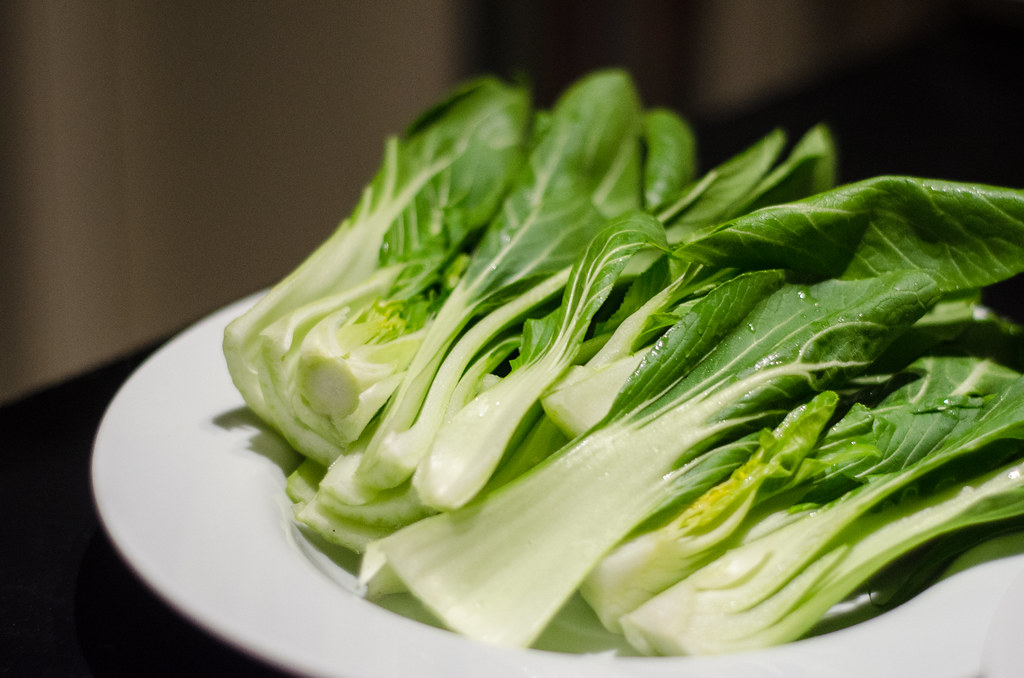
Image result for pak choi

Masterchef (the amateur one) is on our television just now – and it’s finals week so doubly glued!  I much prefer this to the professional one and love watching how they all develop their own styles and learn new tricks and recipes.  I always get (even more) enthused with my own cooking and trying out new recipes on John.  The following dish is (apparently) the best thing I have ever made!  Obviously, I made enough for the both of us but I have tweaked it just for one – although today might be the day you invite a friend over and show off your new skills – in which case, just double up?

CHINESE CRISPY BEEF

FOR THE BEEF

  • 200g beef topside or rump steak, sliced into strips
  • 1/4 tsp black pepper
  • 1 tbsp soy sauce
  • 3 tbsp cornflour
  • 2 tbsp vegetable or rapeseed oil

FOR THE STIR-FRY

  • 3cm piece of fresh ginger, grated
  • 2 cloves of garlic, grated
  • 2 spring onions, cut into 2.5cm lengths
  • 1 long red chilli, sliced at an angle
  • 1/4 tsp black pepper
  • 3500g pak choi, leaves and stems separated, both roughly chopped
  • 2 tbsp Shaoxing rice wine (you can use sherry if you haven’t any)
  • 1 – 2 tbsp. soy sauce
  • 1 tbsp sesame oil
  • 75g beansprouts

In a bowl, toss the beef strips with the Sichuan pepper and soy sauce, then leave to marinate for 10 minutes. Put the cornflour into a bowl, add the beef and toss to mix. Heat 1/2 tbsp of the vegetable/rapeseed oil in a large wok over a high heat until the oil is smoking. Place a third of the beef in the wok and stir-fry for 2 minutes, until crispy. Remove with a slotted spoon and set aside on a plate. Repeat with the rest of the beef, using the remaining oil, transferring each batch to the plate once it is cooked. Add the ginger and garlic to the oil in the wok (from cooking the beef) and stir-fry for 1 minute. Add the spring onion, chillies, pepper and pak choi stems, then stir-fry for 2-3 minutes. Add the rice wine, soy sauce, sesame oil and 2 tbsp water. Stir-fry for 2-3 minutes, then add the pak choi leaves and beansprouts. Stir-fry for another 2 minutes until everything is cooked. Serve in warmed bowls, topped with the crispy beef  and sesame seeds, if liked.  Depending on how hungry you are, you can eat it as is or with rice or noodles.


Luscious Lemons

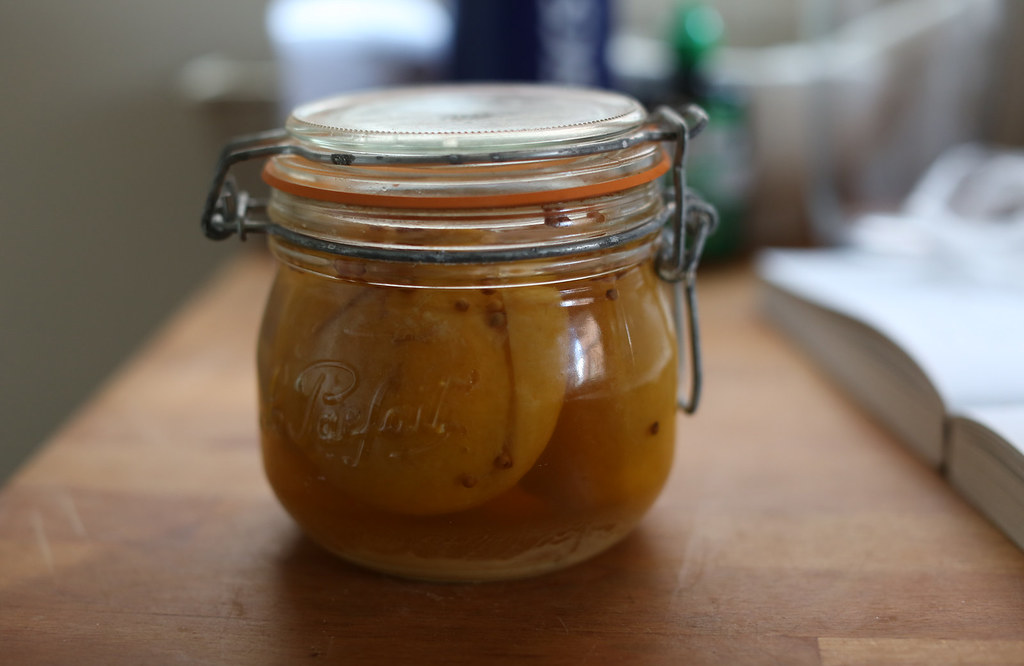
Image result for preserved lemons

When I first discovered the deep, citrussy undertone preserved lemon brings to recipes I became a little bit obsessed with it, and worked my way through a whole jar in no time at all. It’s a traditional ingredient in North African cooking, where it’s used in tagines, but I found myself using it for all sorts of things from fish, seafood, poultry, roasted vegetables and pasta dishes. I love just stuffing some into a chicken before roasting it, then basting the bird with the lemon-infused juices. You can, of course, buy them ready made in a jar (now where’s the fun in that!) but they’re incredibly easy to make very well yourself. You just need a little bit of patience for the salt to work its magic before you can enjoy the brilliantly intense flavour. Make a jar and keep it in your fridge; it’s a beautiful glowing, golden thing and makes a great gift for friends too

A jar of preserved lemons

  • 130g sea salt
  • 100g caster sugar
  • 5 large unwaxed, lemons, washed, sliced finely, pips discarded
  • 1 tbsp olive oil

Mix the salt and sugar and scatter a pinch of it into the preserving jar. Dip one side of the lemon slices in the salt and sugar mixture. Layer, salty-side down, in the jar. Occasionally scatter some more of the mixture on top. Press the layers down to squeeze in the remaining lemon slices, until you’ve reached the top of the jar. By the end, the juice and self-made brine should completely cover the layers. Top with the oil, ensuring none of the lemon is in contact with the air. Seal the jar. Refrigerate for up to 2-3 months.

And one recipe – more to follow (I wouldn’t want you to go to all the trouble above and then not use them!)

Spiced Butternut Soup with Salted Lemon

  • 1 onion, chopped
  • knob of butter
  • 1 tablespoon olive oil
  • 1 garlic clove, peeled and chopped
  • 10g ginger, peeled and chopped
  • 1 leek
  • 250g peeled butternut squash
  • 1 red chilli (size depending on how much you like your heat!), sliced
  • 2 preserved lemons
  • 1 tablespoon flour
  • 1 litre chicken or vegetable stock (yes, I know this is going to make more than enough for one but soup is really worth making a batch of and keeping a jug in the fridge)
  • coriander (if liked)

Melt the butter with the olive oil and add the onion. Cut the leek into 1cm pennies and chunk the squash. Halve the lemons, take out the pips and slice into baton.  By now, the onion should be nicely cooked so stir in the garlic, ginger and leek and cook for about 5 minutes.  Dust with the flour and stir in the stock, squash, chilli and lemons.  Increase the heat, stirring to a simmer.  Half cover the pan and cook till soft. Add the coriander at the end, if liked, before serving.

Meatless mushrooms

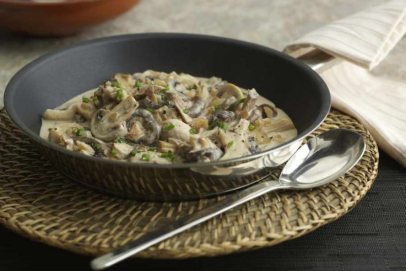
mushroom_stroganoff_825_551_84_int_c1

According to recent articles in newspapers and magazines, a majority of us are turning from meat eaters to vegetables and fish.  This is definitely true in our household (gearing up with the seed catalogues for my spring vegetable planting!) and we try to eat 2 or 3 times a week vegetable and/or certainly fish dishes. It is difficult sometimes to make it all not so bland though so I am really hoping you will find this (meaty without the meat) mushroom dish will tickle your tastebuds!

Mushroom Strogonoff

  • 1 small red onion
  • 1 -2 garlic cloves, grated
  • 1/2 teaspoon smoked paprika
  • 1/2 teaspoon English mustard
  • 120 – 150grams quartered mushrooms (this can be all chestnut or mixed mushrooms)
  • 1/2 vegetable stock cube dissolved in 125 ml hot water
  • 1/2 pot crème fraiche or 1/2 pot sour cream (if you haven’t got either but you do have cream just add a little lemon juice and leave to stand a few minutes)

In a wide based pan, melt a little butter and oil and gently cook the onions and garlic.  Add the mushrooms and seasoning and cook without stirring until caramelized.  Add the stock, paprika and mustard and cook for another few minutes.  If it seems a little too liquidy, cook hard to reduce it. OFF the heat, add the crème fraiche/cream and stir altogether.  Traditionally, this is served with boiled rice but I have also served this with linguine and other pasta types so this bit is up to your own creative genius! Sprinkle with parsley – and, for an extra layer of texture, quartered slices of fried bread (in butter, of course!)