Have you been enjoying this hot, sunny weather? I have travelled extensively but have decided that when the weather is wonderful there is nowhere more lovely than England. The colours and smells are amazing as everything comes to life and smiles at the sun!
It’s very important, though, to remember to keep hydrated – and I don’t just mean the beer/lager you are drinking watching the football or the Pimms watching the tennis. The elderflower is out now in full bloom but it doesn’t last too long so now is the time to make 2 lovely drinks to put in the cupboard for you to taste the sunshine when it may not be here.
Try and pick your flowers in the morning as the aroma fades with the day
Elderflower Champagne
7 heads of elderflowers
560 grams of sugar
7 pints boiling water
2 lemons
2 tablespoons white wine vinegar
Put the flowers into a big bucket and add sugar, water and lemons. Give it a good stir and add the vinegar when cold. Bottle into clean plastic bottles (glass ones have been known to explode – and you can help save the planet using up the plastic!). Leave for a minimum of 2 weeks to go fizzy. Serve with lots of ice and sliced lemon
Elderflower Cordial
1 kg Granulated Sugar
1 litre boiling water
50g citric acid (from a chemist) or juice of 2 large lemons
zest of 2 large lemons
15 elderflower heads
Put the sugar and water in a bucket and stir to dissolve. Add the citric acid or lemon juice and zest. Add the flower heads to the sugar syrup and leave 1 -2 days, stirring regularly. Strain through some muslin into sterilised bottles and store in a cool place. To use, put a little in a glass and top with still or sparkling water. You can even add it to your gin and tonic – and if cooking gooseberries add instead of water.
Another cordial I have made recently is LIME – fresh and sharp when diluted with sparkling water, tonic – even vodka or gin!
3 Limes
355ml Hot water
150g Granulated sugar
3/4 Teaspoon Citric acid
Zest the three limes and set to one side. Juice the limes and set to one side. Put the sugar in a bowl and stir in the citric acid. Put the water in a saucepan, bring it to a boil and add the sugar. Stir until the sugar is dissolved. Remove from heat. Add the lime juice and peel. Stir. Simmer for 2 minutes. Remove from heat, cover, and rest the mix until cool. This should be at least one hour. Pour into a container, seal and refrigerate overnight. Strain the mix using a fine-mesh strainer. Pour into a clean bottle and keep in the fridge.
It’s VE Day this week (Thursday 8 May) and up and down the country will be street parties, starting today in London, with a flyover of Buckingham Palace, and other communal events. It’s a time of celebration and coming together of communities and to give thanks for those who gave their lives so that we may have the space and freedom to love our lives, peacefully.
With the thought that somewhere, some of you may be asked to contribute to a buffet table I’m posting some ideas for sandwiches, a pudding cake and a non-alcoholic drink to wash it all down with.
There are so many breads and wraps out there, I am leaving the hard bit of what to use up to you – I’m just going to give you the fillings, a meat, fish and veggie one.
Preheat oven to 350 degrees. Line the bottom of a 9-inch springform pan with parchment paper. Butter the paper and the sides of the pan. Peel, halve and core your apples, then chop them into medium-sized chunks. (I cut each half into four “strips” then sliced them fairly thinly — about 1/4-inch — in the other direction.) Pile the cut apples directly in the prepared pan. Meanwhile, in a large bowl, using an electric mixer or whisk, beat eggs with sugar until thick and ribbons form on the surface of the beaten eggs. Beat in vanilla, then stir in flour with a spoon until just combined. The batter will be very thick. Pour over apples in pan, using a spoon or spatula to spread the batter so that it covers all exposed apples. (Spread the batter and press it down into the apple pile. The top of the batter should end up level with the top of the apples.) Bake in preheated oven for 55 to 60 minutes, or until a tester comes out free of batter. Cool in pan for 10 minutes on rack, then flip out onto another rack, peel off the parchment paper, and flip it back onto a serving platter. Dust lightly with ground cinnamon and icing sugar
Rhubarb Cordial
450g rhubarb, chopped
225g sugar (I know it seems a lot, but remember you are going to dilute it and don’t need a lot)
300ml water
1 orange, zest and juice
1 lemon, zest and juice
Put the sugar and water into a large saucepan. Add the rhubarb, zests and juices and bring to the boil. Cook until the rhubarb is completely mushy (technical term!). Put a piece of muslin over a large bowl (I secure mine with an elastic band) and pour the liquid and fruit into it. Leave it to drip through overnight. Bottle and keep in the fridge. I have no idea how long it will last as it seems to go as fast as I can make it, but I would think about 1 week to 10 days.
The tradition of eating and gifting chocolate at Easter dates back centuries ago when Christian Europeans began exchanging eggs as symbols of rebirth during Lent season. This evolved into candy-filled eggs made from sugar paste or marzipan, which became popular during springtime festivals at the end of Lent on Easter Sunday. Later on, these treats were replaced by hollowed-out chicken eggs filled with sweets. It wasn’t much later that solidified cocoa butter was used to make edible “chocolate” eggs – a practice that continues today in many countries around the world.
The Victorian era saw a significant rise in the popularity of gifting chocolate at Easter. At the time, it was seen as an extravagant and luxurious chocolate treat, so gifting chocolates became a sign of status. The British chocolatier JS Fry & Sons are often credited with being the first to produce a hollow chocolate egg. To keep up with the growing demand for this new treat, they created a special machine to produce their eggs in 1873. This advanced technology allowed them to create hollow eggs at an unprecedented rate, which would soon become the most popular Easter treat in the UK.
But not all chocolate has to be made into eggs – try these recipes instead for a sweet treat throughout the year – you are worth it!
CHOCOLATE DELICE
200g dark chocolate (cooking or posh)
1/pt single cream (if you only have double use that with half milk)
1 egg
Break up the chocolate in a bowl. Bring the cream to a boil and pour over. Whizz till all melted and add the egg to blend. Pour into individual dishes and put in fridge till ready.
Find a quiet corner with a your book, take a teaspoon and enjoy.
TIFFIN BARS
100 g Butter
25 g Caster Sugar
3 tbsp Cocoa Powder
4 tbsp Golden Syrup
225 g digestive biscuits approx. 15 (or Rich Tea or Ginger snaps or any of the broken biscuits lying at the bottom of your biscuit barrel)
100 g Raisins
230 g Milk or Dark Chocolate
Line your tray-bake tin with greaseproof paper Set aside. Crush your biscuits. You want most of it to be quite fine but leave some bits in bigger chunks to give your Tiffin a bit of texture. Add the butter, sugar, cocoa powder, golden syrup and 30g of milk chocolate to a large bowl over a saucepan of boiling water, stirring often. Stir in the biscuits and raisins and mix well. Press the mixture into your pre-lined tin. Melt the remaining chocolate in another bowl over water, stirring often. Pour over the biscuit mixture and smooth over evenly. Leave to set in the fridge for at least 2 hours but ideally over night before cutting into individual portions. You could also add chopped marshmallows/cherries/dried apricots/maltesers – whatever takes your fancy!
FRENCH CHOCOLATE ICE CREAM
2 oz caster sugar 4 tablespoons water 6 oz plain chocolate
3 egg yolks (freeze the egg whites individually for later or make some meringues)
1/2 pint double cream
Melt the sugar and water together till a light syrup. Break up the chocolate into a bowl and pour the hot syrup over. Mix to smooth and add yolks. Whip the cream until stiff, fold in the chocolate and freeze. Simples!
Onions – cheap and cheerful and plentiful – and so good for you! Brown ones, yellow ones, red ones, shallots, and spring (scallions)
Look at their incredible health benefits:
The phytochemicals in onions along with their vitamin C help improve immunity.
Onions contain chromium, which assists in regulating blood sugar.
For centuries, onions have been used to reduce inflammation and heal infections.
Got stung by a honeybee? Apply onion juice on the area for immediate relief from the pain and burning sensation.
Onions help remove free radicals, thereby reducing your risk of developing gastric ulcers.
Those bright green tops of green onions are rich in Vitamin A, so do use them often.
And just look what you can do with them – to name a very few.
But before you do – tricks to stop crying. I can’t guarantee them but give them a try!
Chill the onions first
Use a super sharp knife
Rub your knife with lemon juice
Cut under water
Classic French Onion Soup
1 tablespoon butter
2 large onions, thinly sliced
1/2 teaspoon sugar
1 dessertspoon balsamic vinegar
1/2 – 3/4 pint of beef stock (you can make this up with some red wine if you have any)
Slowly melt the butter in a saucepan and add the onions. Cook over a very low heat, stirring occasionally for about 30 minutes until soft and lightly browned. Stir in the sugar and vinegar and cook for a further 5 minutes. Add the stock and bring slowly to the boil and simmer, uncovered for about 15 minutes. Ladle into a bowl – and the nicest way to finish off is to toast some bread, top with grated cheese and float on the top!
French Onion Tart
Pastry made with 50 grams of butter and 100g plain flour
1/2 kilo onions
25 grams butter and 1 dessertspoon olive oil
2 egg yolks and 100 ml of double cream
50 grated cheese
This is the easiest pastry recipe known to man (or woman) – rub the butter into the flour and enough cold water to bring the mixture together and simply press it straight into a small tart tin, using your hands, without even rolling. You now want to bake it blind – which means laying some greaseproof paper on top and filling it with clay baking beans or dried pulses – even bread crusts – as a weight. Bake it in a oven for about 15 mins at 200oC.
Meanwhile, heat the butter and oil in a pan and add the sliced onions and cook very gently till soft – about 1/2 hour (just like the soup). Remove from the heat and season well (a little nutmeg tastes nice, too!) Beat together the yolks and cream and finely grate the cheese. Add to the onions and spread evenly into your pastry case. Bake at 190oC for about half an hour until the filling is lightly puffed golden. Serve with a crisp salad.
Spicy onion chutney
1 big onion diced
3 – 4 tablespoon tomato ketchup
1 teaspoon red chilli powder
1 teaspoon cumin seeds
1 teaspoon ground cumin (optional)
1 teaspoon lemon juice
salt to taste
First peel the onion and dice it finely If you have time, soak diced onion in a bowl of cold water with ice. Meanwhile, mix tomato puree/tomato ketchup, chilli powder and cumin powder together in a bowl. Add lemon juice. Drain the onions after 15 mins and ensure you pat dry with a clean kitchen towel to remove the excess moisture. Mix the onions in the tomato mixture and add salt to taste.
If you have leftovers, you can add it into a curry when preparing the onion/garlic base.
Potato Salad with Spring onions
1 lb potatoes waxy
1 tablespoon white balsamic vinegar more to taste
2 – 4 spring onions depending on size
1 small red onion or ½ a medium one
1/2 bunch parsley
Some sprigs of basil
Dressing:
60 ml sour cream
30ml Greek yogurt
30ml mayonnaise
1 tablespoons milk more if necessary
1/2 teaspoon Dijon mustard heaped
Salt and ground black pepper to taste
Cook potatoes: Peel, wash, and cut the potatoes into chunks. In the meanwhile, bring a large pot of water to a boil. Add salt and potatoes. Cook until soft but not falling apart, about 13-15 minutes, depending on size. Check with a fork. Drain well and stir in the balsamic vinegar. Let cool before adding the dressing. Prepare onions and herbs: Cut the spring onions into fine rings,red ones into fine cubes, and chop the parsley finely. Don’t chop the basil yet; only chop and add it to the spring onion potato salad before serving.
Dressing: Mix sour cream, yogurt, mayo, milk, mustard, salt, pepper, sugar, and white balsamic vinegar in a small bowl.
Place the cooled potatoes into a large bowl. Add dressing, spring onions, red onion, and parsley. Stir well to combine. Adjust the taste with more salt, pepper, and balsamic vinegar. Add the chopped basil before serving. Serve immediately or refrigerate until ready to serve. Bring to room temperature for about 20-30 minutes before serving, stir well, adjust the seasoning again and add the basil.
Everything is starting to bloom and hazes of green cover the trees and hedges. Amidst showers and sunshine, we are out walking more and enjoying the Spring. Daffodils, tulips and bluebells; new rhubarb and spinach and strawberry flowers with the promises to come. The Husband has been fishing and the added bonus to this is the first of the year’s green treasures – wild garlic by the riverbank. It looks like this:
Please note– wild garlic does look similar to lily of the valley, which is poisonous. The key difference between the two plants is that wild garlic always smells – yes, you guessed it – of garlic. If you’re in any doubt about which plant you’ve found, do not eat it.
Take yourself out for a walk in the woods and you won’t fail to notice the fragrant smell of wild garlic as you stroll through – the scent is truly hard to miss! The leaves can be eaten raw or cooked and taste milder than shop-bought garlic. A fairly low growing plant and the most beautiful vibrant green. Pick it when you find it and you can make wonderful soup, dips, butter and oil.
Wild Garlic Soup
This recipe is enough for 4 but freezes beautifully. Not only is it delicious but also helps lower cholesterol and high blood pressure!
1 onion sliced
2 – 3 potatoes (these are for thickening the soup so depends on size)
500 ml water
stock cube (I use a vegetable one)
milk/crème fraiche/cream
Saute the onion in a little butter in a large saucepan. Add chopped potato, stock cube, and water and bring to the boil. Cook until the potato is soft. Lay 3 – 4 handfuls of the garlic leaves on the top and allow to wilt and cook for 2 – 3 minutes. Cool slightly and, using a hand blender, puree. Put back into the saucepan and add milk or cream or creme fraiche to taste along with plenty of pepper. It never lasts long in our house but will keep in the fridge for 2 – 3 days – or ladle into bags to freeze. Serve with crusty bread and a dollop of creme fraiche.
Wild Garlic Oil – blanch several handfuls of leaves in boiling water for 5 – 10 seconds then immediately drain and toss into iced water (this keeps the colour). Drain again and wrap in an old tea towel and squeeze all the liquid out. Chop up into small pieces and put in a jam jar or bottle and top up with 150 ml of olive oil.
Wild Garlic Butter – I make lots of this and usually manage to eke it out all year. Chop the garlic leaves up as you would any other herb. Soften a block of butter, add salt and pepper and the chopped leaves. Roll into cigar shaped pieces, wrap in cling film and freeze. I usually keep one on the go in the fridge, replacing with a frozen one when needed. Just cut off slices and use to cook with as you would any other flavoured butters.
Garlicky green Goddess dressing
Put about 30 washed and dried garlic leaves into a food processor or blender with 300ml sour cream (if you haven’t got this creme fraiche will do or make your own by adding some lemon juice to fresh cream – leave aside for a minute or two whilst it goes thick) , the juice of half a lemon and salt and pepper. Blitz till smooth and serve over a green s salad or use a dipping sauce for bread or crisps.
Every greengrocer and farm shop seems to be selling leeks at the moment. I love them – so easy to grow and so much you can do with them. Ever heard of potato and leek soup? I thought so! But how often do you cook leeks in other recipes? Have you tried them in pasta, stuffing, or risotto? If I had my way, we’d all be eating leeks more often. They’re incredibly versatile, adding unique, sweet, and mild onion flavour to a huge range of dishes. This vegetable seems humble, but there’s so much that it can do.
Sometimes, I make up a recipe that is so ridiculously non-challenging and moreish, that I just have to pass it on and this is one of them.
Ailsa’s Cheese and Leek Pate
1 leek
Large knob of butter
2 – 3 cloves of garlic, crushed
200g packet of cream cheese
Lots of freshly ground black pepper
Cut the leek up into thin slices – I cut down the middle and then slice. Melt a little butter in a pan with some salt and coarse pepper. Saute the leek and garlic very slowly until soft (keep an eye on it and move around the pan as you don’t want it to burn). Put the cream cheese in a bowl, tip over the hot leek and blend with a stick blender until pate-like. Put into a small bowl and seal with some melted butter (if you want to be super-posh in your serving, line a small tin with cling film and spoon it in – when set in the fridge you then tip it out and slice like a cake on a plate with salad and bread). Personally, I just eat it almost immediately with crusty bread/toast/or favourite crispbread!
Leek and Potato Soup (couldn’t really miss this out!) with cheesy mustard croutons
10 grams butter
2 leeks
1 teaspoon dried tarragon (optional)
1 large potato
500 ml stock with boiling water and a stock cube
30 grams watercress (optional)
Melt butter in a large pan and add chopped leeks and tarragon. Add the chopped potato and stock. Bring to boil and cook until potato is soft. Add the watercress if using, simmer for 3 minutes and blend till smooth. Preheat grill to high and toast 2 slices of bread/baguette until crisp. Spread each slice with some Dijon mustard and top with some grated cheese (any kind you like). Put the soup into a bowl and top with a cheesy crouton and serve.
Leek risotto with poached egg
60 grams frozen broad beans or peas, cooked
some butter and oil
2 leeks
20g / 4 oz Arborio/ risotto rice
glass Dry white wine (don’t worry if no wine, just make up with extra stock)
1 pint hot chicken or vegetable stock
2 Teaspoons butter
2 Teaspoons olive oil
A little cream or crème fraiche
60g/2oz grated parmesan cheese
juice and zest of 1 lemon
2 – 3 tablespoons parsley chopped
Melt a knob of butter with a little oil and add the thinly sliced leek and cook till soft over a low heat. Increase the heat and add the rice turning it in to the buttery leeky mix. SLOWLY add the stock (a tablespoon at a time to begin with), stirring all the time in between additions until the rice is soft. Add the beans and/or peas. Remove from the heat and add the lemon, parsley and cheese. Pile into a bowl and top with a poached egg – delicious!
ps this will make more than one portion but it’s a difficult one to scale down. However, it will freeze very well for another day when you may need some comfort food.
February 14thNot everyone’s Valentine’s Day will be filled with chocolates and roses. It can be a hard day for many people and when you’re feeling low, it’s tough to motivate yourself so do something nice for yourself. Light a candle (the one you bought but have been saving for a ‘special occasion’) read your book (give yourself time to read thatextra chapter) or take yourself off on a stroll (walking that route you never take because although it’s beautiful, it always takes a little bit too long) And most importantly, cook something unctuous and delicious (a recipe that requires a bit of time and patience).
This is comfort food when you may need it most.
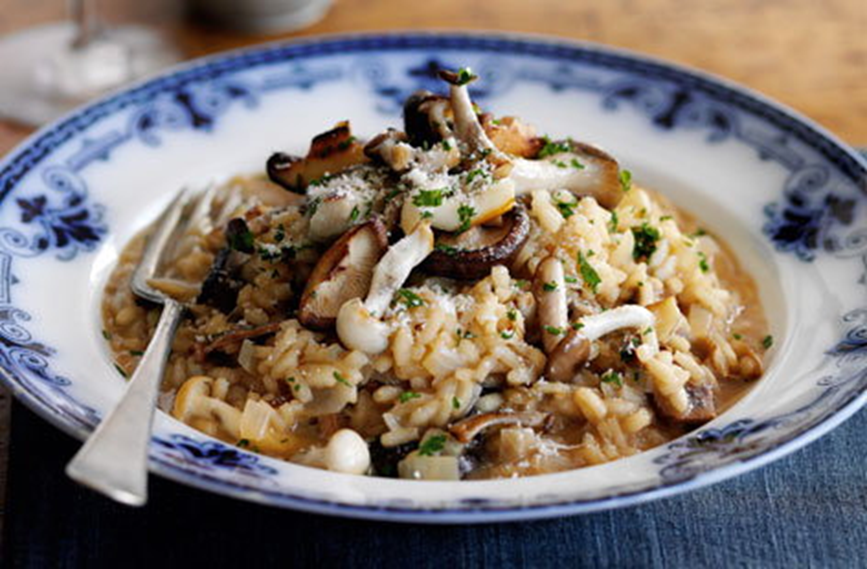
Mushroom risotto
1 handful of chestnut mushrooms
OPTIONAL dried porcini mushrooms
2 sticks celery – finely diced
1 white onion, finely diced
1 clove of garlic, crushed
200g risotto rice
Splash of white wine (save a glass for yourself)
1 pint stock (chicken/vegetable, whatever takes your fancy)
Parmesan cheese
Knob of butter (cold, to be stirred in right at the end)
OPTIONAL glug of Worcestershire sauce or mushroom ketchup
Make your stock and pop the porcini mushrooms in, if you have them, and keep it warm. Fry the onion, garlic and celery in a large saucepan with a little bit of butter and olive oil until soft (ideally ten minutes, very low heat). Pour the risotto rice in and, stirring often, let the rice soak up some of the oil and butter. Once the rice starts to stick a bit, pour in the white wine, let that bubble away as the rice soaks it up before slowly adding a ladle-full of stock in. Continue this way, allowing the rice to soak up the liquid, between each ladle full, until the rice is soft but still a little bit chewy and moist. You’re almost teasingly feeding it liquid ladle-full by ladle-full – just as it has drunk up one, the next goes in. Take it off the heat once all the stock has been used, and grate in the parmesan, stirring it round so it melts into the risotto.
Finally, add some seasoning and a lump of cold butter and let it ooze in and cover the pan for a few impatient minutes. It should still just be moist – the Italians spoon it onto a plate and jiggle the plate around in circular motions to allow the risotto to rest in an even flat disc, so it must still retain some moisture and ooziness to do this.
Scatter the parsley on top as a garnish – or even the celery leaves as they are tasty, nutritious and shouldn’t be wasted.
There are two things which always take me back to my roots and like to celebrate – Hogmanay and Burns Night. The former has no particular culinary history (a lot of alcohol and emotional singing of Auld Land Syne). The latter, of course, has the Burns Supper. Haggis, neeps and tatties are a given and can really only be served one way – but you may not know the following 2 recipes.
Cullen Skink– a hearty soup made from leeks, onions, potatoes and smoked haddock
50 grams butter
1 small onion and 1 small leek, finely chopped
2 medium potatoes, peeled and cut into cubes
150 ml water
200g (ish) smoked haddock
200 ml milk
Melt butter and leek in a saucepan and cook for about 5 minutes without browning. Add potatoes and cook till soft. In another pan cover the haddock with the milk and cook gently till tender (you can also do this in the microwave). Remove from milk when cool and flake gently into large pieces, removing bones. Drain the potatoes (keeping the water), take out some of them with some leeks and onions and mash the rest. Return the vegetables to the pan with the liquid and add the milk and haddock. You may need more liquid – you can add some more milk, white wine and/or cream or creme fraiche – whichever takes your fancy. You can also add some chopped parsley and/or chives for a bit of colour. Serve with lots of crusty bread to mop up.
Cranachan– a delicious mix of raspberries, cream, whisky, honey and toasted oats. What’s not to like?
100 grams porridge oats
medium pot of double cream
2 – 3 tablespoons honey to taste
2 – 3 tablespoons whisky (I personally hate whisky but somehow can take it here!)
raspberries – fresh or frozen
Heat a heavy based frying pan up and toast the oats until nutty and pale brown (I sometimes add a little demerara sugar so they caramelize but you do have to keep moving them around!). Put to one side to cool. Whip the cream till soft peaks and fold in the honey and whisky. Layer up the cream, raspberries and oats and eat immediately whilst the oats are still crunchy.
ps One of the greatest myths about the Selkirk Grace (heading above) is that it was written by Robert Burns. He was said to have delivered the grace at a dinner party, held by the Earl of Selkirk in 1794. However, at that time, the Selkirk Grace was already 80-100 years old, and was originally called the Galloway Grace or the Covenanters’ Grace. Burns, a well known individual of the time, brought some popularity to the grace, which is why people began to call it the Selkirk Grace, as his speech in Selkirk became well known. Rabbie was known to recite it at many dinners, and so people often mistakenly thought that he wrote it.
Auld Lang Syne (which was written by him) is sung at the end of Burn’s night. A song about forgiveness, friendship, and new beginnings.
The middle of January is always hard, I think. Usually not great weather and still recovering from the festive season – both in spirit and financially! Trying to keep to resolutions and cope with Dry January, it’s nice to think of something to cook that is both comfort food and pennywise. Make this stew on a dark, dismal afternoon and have it as a TV dinner, watching your favourite comedy and you will soon be cheered up.
Stovies– The word Stovies means “bits from the stove,” so it is a recipe using whatever you happen to have to hand on a Monday, after your Sunday roast – although you can always use fresh meats, too.
Vegetables (any that you have left-over from the day before)
Salt and pepper
Preheat the oven to 190 C / Gas 5. Place a casserole dish, on the stove over medium heat. Add the lard or dripping, and melt. Add the onions and cook until soft, but not browned – about 5 to 8 minutes. Take care not to burn the onions. If using, add the beer or stout and turn the heat up and allow to boil for 2 minutes to burn the alcohol away. Add the meat and stir well. Add the potatoes in layers, seasoning each layer with salt and pepper as you go, before adding the next layer. Pour over the stock or gravy (or both). Cover with a lid and cook in the preheated oven for 45 to 50 minutes, checking from time to time to make sure the stock is not boiling dry. If it is, add a little extra stock. Ten minutes before the end of cooking, add any leftover vegetables, stir well, and check the seasoning. Cover with the lid and cook for a further 10 minutes. The meat and vegetables will break up to create a thick, hearty stew-like consistency. Be careful not to over boil, as you need to keep chunks of meat and vegetables. Serve the stovies in a deep dish or bowl with rough oatcakes and brown sauce, if you like it.
Variations – Don’t feel that you have to be restricted to the pickings from your Sunday lunch. Stovies can also be made using a tin of corned beef, some cooked minced beef, or sausages:
Corned Beef: Crumble the corned beef and stir through your potatoes 20 minutes before the end of cooking.
Cooked Minced Beef: Stir through the potatoes 20 minutes before the end of cooking.
Sausages: Cook the onions as above. Using 1 pound of sausage, slice thickly then put one layer on the onions, followed by a layer of potatoes. Continue until all used up. Cook as above.
New Year – new look – and an update of why we/you are here.
This cookery blog is a collection of some favourite recipes written at my kitchen table, using ingredients you can find locally and in season. Personally, I love the changes and wouldn’t want to live anywhere other than the UK with all its climate and regional diversities. I look forward to the first asparagus from the farm just around the corner, English strawberries from the local market, the freshest fish from our British waters, field mushrooms from an autumn walk.
With less carbon footprint and more freshness, you will soon understand why eating British and following the months will tickle your tastebuds, save you some pennies and help local economy.
I live in Worcestershire with The Husband, one cat and with visiting children and grandchildren. as and when. In my time, I have been a nurse, made children’s clothes, had a catering company, estate agent and for the last 16 years volunteered, helping with arts and crafts, at a local Hospice. It was there that I was encouraged to start www.ailsacooks4one.com after taking in recipes for those bereaved and having to cook just for themselves. I want to give you the love of cooking I have and the confidence to do so for others.
And, now, I want to get everyone else onboard, following the Seasons!
It wasn’t so long ago that every meal people ate was prepared using seasonal ingredients because there was no means of transporting international produce between countries. People ate as nature intended and their diet was dictated by what grew locally. There really is no sense or benefit in eating fruit, vegetables, meat and fish that have been flown around the world when you can enjoy native ingredients that have been grown, reared or caught a matter of miles from home.
Every time we look at our plates, we should ask ourselves where the food comes from, how it was produced and what it cost – not just in terms of money but also in terms of environmental damage. To entice us to buy fruits and vegetables, supermarkets lay out stacks of perfectly formed specimens, Unfortunately, this means that 20 – 40% of local farm produce is wasted because it isn’t “perfect” enough even though it tastes absolutely fine. It also means that to reduce the risk of blemished produce, the former relies more and more on a range of pesticides and fertilisers to keep food available out of season. The fertilisers also cause massive problems in the environment as soil biodiversity and water course are polluted by the run off from fields.
Locally grown will often cost less, will be fresher, tastier and more nutritious. It will be less damaging to the Earth due to the reduction in energy used to transport far flung places. You will also be supporting farmers and producers in your area and, in turn, helping the local economy.
We can change things for the better by:
accepting “wonky” or less than perfect vegetables and fruit
Grow your own.
Eat by the Season
Spring is traditionally a time of culinary celebration after the Winter months. Fresh green produce, various meats and berries begin to appear. By the Summer the harvest from land and sea is in progress and many fruit and vegetables are plentiful. With the advent of Autumn, there is still much about and will now include wild mushrooms, British apples and pears and nuts. Winter is not the dull culinary season many people think it is with game and winter vegetables that need a touch of frost to bring them to their peak.
January 5th I know it’s a bit of a cliché and perhaps because I am a Scot and brought up in the tradition of Hogmanay but I love New Year’s Day. I see a whole year before me stretching out just waiting to be filled with people and places and happenings! Some will be bad as well as good but I’ll take that for a chance at newness and anticipation for a year to come. And my main resolution this year – to try to cook seasonally – as I hope you will!
Make the best of the month’s offerings with warming soups and casseroles and seasonal cooking will never feel so wholesome.
Anything-you-Have Coconut Curry Soup – the best soup using leftover veg.
1 tablespoon of olive oil
1 chopped onion
1 -2 cloves garlic, smashed
small knob of ginger, grated
1 tablespoon red curry paste
1 tablespoon turmeric
salt to taste
1 dessertspoon sugar
1 14 ounce can of coconut milk
1 pint vegetable stock (from a cube will do)
the fun part – any vegetables you have in the house! You can add:
Heat the oil in a large pot over a medium heat. Add the onion, garlic and ginger and stir fry for a few minutes. Add the curry paste, turmeric, salt and sugar. Stir fry again to combine. Add the coconut milk and stock – and whatever lost vegetables you have found! Simmer until soft, blend to silky smooth and serve with some crispy fried onions and/or coriander on top.
This is obviously going to make more than more portion – but it will keep in a pot in the fridge for about a week – or you can freeze it in your own sized portions!












 Ailsa cooks for One