Spring into Asparagus

Image result for asparagus

I am very lucky to live in the heart of asparagus country – and even more within walking distance of a lovely farm shop which grows its own.  By the time I have walked there, bought and walked back I have more than justified the butter that simply has to go on it! There are lots of ways to eat this delicious vegetable other than just boil and serve,  – from risottos to soups (our farm shop sells bits that have come off when picking which is ideal for soup so ask your local shop) to using cooked stalks to dip into runny boiled eggs.  Try wrapping parma ham around each stalk and putting under a hot grill for a few moments.  Make the most of the British season – it is all too short!

Salmon Rolls with Asparagus and Butter Sauce

  • 2 thick or 4 thin asparagus spears
  • 1 thin salmon fillet
  • juice of 1/2 lemon
  • 1 small shallot, finely chopped
  • 3 peppercorns
  • 60 mls white wine
  • 2 tablespoons double cream
  • 100g butter, cut into small cubes
  • fresh parsley

Steam the asparagus for 6 – 8 minutes till tender, refresh under cold running water.  Lay on top of the salmon fillet and roll up.  Place on a rack over a pan of boiling water, sprinkle with lemon juice, cover and steam for 3 – 4 minutes till tender (I use one of those cheap bamboo steamers on top of a saucepan).  Sauce: Put the shallot, peppercorns and wine into a small saucepan and heat gently until the wine is reduced to a tablespoonful. Strain and return to the pan.  Add the cream and bring to the boil then lower the heat.  Add the butter to the sauce in small pieces, whisking all the time.  DO NOT ALLOW THE SAUCE TO BOIL AS IT WILL SEPARATE! Season to taste, add a little parsley and serve with the salmon roll, some new potatoes and tenderstem broccoli and/or spinach.

Green baked eggs with asparagus

  • 1 – 2 teaspoon olive oil
  • 200g asparagus , cut into 4 cm lengths
  • 2-3 salad onions, roughly chopped
  • 1 garlic clove, crushed
  • 1/2 pointed spring (sweetheart) cabbage, shredded
  • 1/2 green chilli, sliced
  • few drops lemon juice
  • 10 grams feta cheese (or as much as you like!)
  • 2 eggs

Heat a frying pan over a high heat.  Add some oil, season the asparagus and fry, turning now and then, until slightly charred, for about 3 minutes.  Take out and set aside.  Lower the heat and add remaining oil, cooking the onions and garlic for a minute.  Add the cabbage and chilli and fry for 3 – 4 minutes, turning regularly.  Add lemon juice, some feta and the asparagus.  Turn heat to medium-low.  Make 2 holes in the mix and crack in the eggs and leave to for about 5 minutes till the white is set but yolks still soft.  Serve with some sourdough toast to mop up!

Cauliflower in disguise . . .

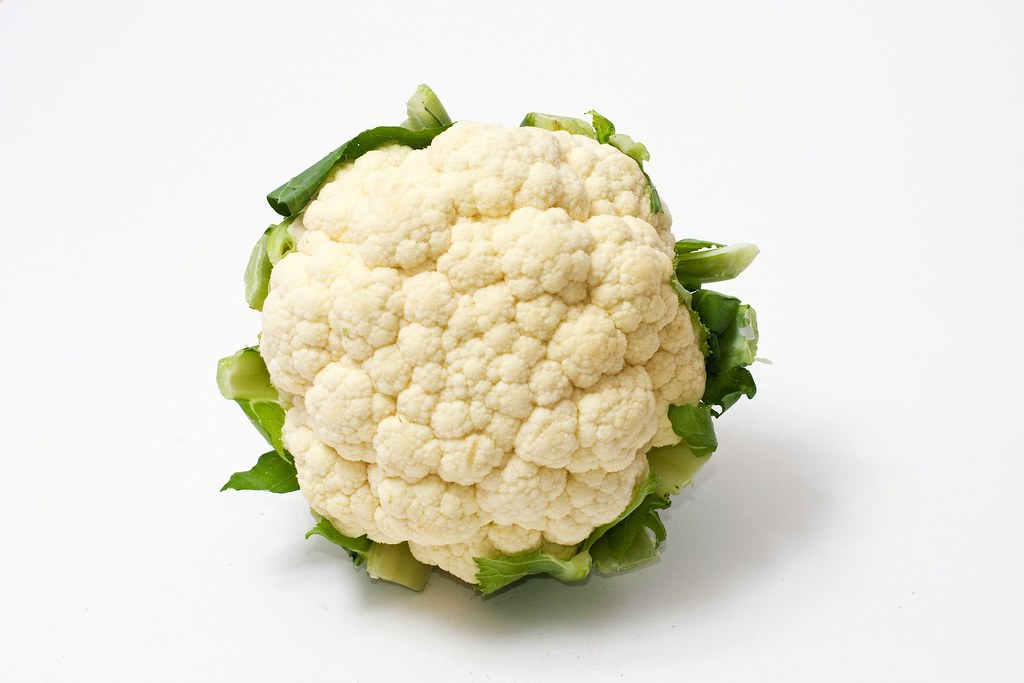
Image result for cauliflower

Cauliflower – one of those vegetables that you either love or hate – mostly thanks to the soggy offerings at school lunches. However, cauliflower is a member of the cancer-fighting cruciferous family of vegetable, anti-inflammatory and antioxidant-rich, and may boost both your heart and brain health!  Eating cauliflower will provide your body with impressive amounts of vitamin C, vitamin k, beta-carotene, and much more while supporting healthy digestion – so perhaps worth looking at again? 

The weekly supermarket sweep finds that they are all selling at about £1.00 each (72p if you have a wonky one from Morrisons!).  I am going to cut one in half for 2 recipes – so at 50p a meal (plus a few pennies for the extras), surely a winner!

Cauliflower and Blue Cheese soup

  • 1/2 cauliflower, florets separated
  • 1/2 litre of water with a vegetable stock cube
  • 1 bay leaf
  • 1 dessertspoon of butter
  • 1 small onion, chopped
  • 1 stalk of celery (did you know that if you keep celery in the fridge wrapped in tin foil it lasts for ages?)
  • 1 potato, peeled and diced
  • 1 -2 tablespoons crème fraiche or cream
  • 1 – 2 tablespoons blue cheese, crumbled (buy some and keep in the freezer and just grate straight from it)  – you can use a strong cheddar if you prefer.

Melt the butter in a large saucepan and add onion, celery and potato and sweat for about 10 minutes. Add the florets (leaves, too, if you want) and the stock and simmer gently for 20 – 25 minutes till the cauliflower is cooked. Remove the bay leaf and blend until smooth and return to the heat, adding the cheese and crème fraiche.

Roasted Cauliflower with Punjabi Seasonings

  • 1/2 cauliflower, florets separated
  • 1 tablespoon lemon juice    1/4 teaspoon ground turmeric   1 teaspoon grated ginger
  • 1/2 teaspoon salt            1/2 teaspoon cayenne pepper           1 teaspoon ground cumin
  • 1 teaspoon ground coriander         1 tablespoon chopped coriander leaves
  • 2 tablespoon olive or rapeseed oil
  • 1 teaspoon whole cumin seeds

Put the cauliflower florets in a large bowl.  Combine the lemon juice, turmeric and ginger and pour over the cauliflower.  Add salt, cayenne, ground spices and coriander and mix well.  Set aside for 2 hours or more tossing now and then.

Preheat the oven to 220oC.  Put the oil in a small frying pan and set over a medium heat.  When hot, add the cumin seed and let them sizzle for a few seconds.  Pour the spiced oil over the cauliflower and toss well.  Spread out the florets in a roasting tin and put in the oven for 25 minutes, turning half way through.  Serve alongside any meat of your choice, any curry – or just on its own with some chutneys to dip into!

NB

Just spent all morning (well, it seems like that!) updating the site so that soups, main courses and desserts have their own titles.  Save you reading all my accompanying waffle when all you really want to do is cook! I’ll continue to do the posts but will also add them to the relevant headings.

Back to cold and rain today (hence the time to do above) – let me know if you’ve found it useful! x

Summertime . . . .

Summertime (has hopefully arrived) and the living is easy.  So this weekend the recipes are easy, full of lightness and energy and giving you plenty of time to be out in the sunshine! Make the most of it – you know in the UK it won’t last!

warm_chicken_salad_03629_16x9

Warm Chicken Salad

  • 1 chicken breast boned, skinned and cut in half
  • 1 orange or red pepper, deseeded and cut in to chunks
  • ½ – 1 little gem lettuce, leaves separated
  • 50g/1¾oz watercress, tough stalks removed
  • 2 ripe medium tomatoes, cut into small chunks
  • ⅓ cucumber, sliced
  • 1 tsp thick balsamic vinegar
  • ½ small lemon, juice only
  • sea salt and freshly ground black pepper

Season the chicken on both sides with salt and pepper. Put a little oil into a frying pan and place over a high heat. Cook the chicken for three minutes on each side or until lightly browned and cooked through. Transfer to a plate. Add a little more oil to the pan and cook the pepper for three minutes on each side or until lightly charred and beginning to soften. Arrange the lettuce leaves, watercress, tomatoes, cucumber and pepper on two plates. Slice the chicken breasts and scatter on top of salad. Drizzle with the balsamic vinegar and squeeze the lemon juice over. Season with black pepper and serve. If you want to serve your salad cold, let the chicken and peppers cool completely before adding to the salad. Cover and chill. Dress with the balsamic vinegar and lemon juice just before serving.

Hot-smoked Salmon salad

  • A few new potatoes halved (I haven’t specified a weight as it’s up to you how many you would like!  You can always cook a few more and make a potato salad later)
  • ½ pack asparagus tips (use the other half tomorrow for breakfast with boiled eggs to dip into)
  • bag mixed salad leaves (including young beetroot leaves and watercress)
  • 1/2 bunch each parsley and mint, leaves picked and roughly chopped (again, you can use the remainder to mix with your cold potatoes)
  • a few radish thinly sliced
  • 1 hot-smoked salmon steak, skin removed
  • 1 spring onion sliced diagonally

For the dressing    1 tbsp lemon juice       60 mls olive oil       1/2 teasp wholegrain mustard   1 red chilli

Boil potatoes in salted water for 10 mins until tender, adding the asparagus tips for the final 2 mins of cooking. Drain and allow to cool. Whisk together the salad dressing ingredients. then season to taste. In a large bowl, toss together the potatoes, asparagus, salad leaves, herbs and radishes. Add two-thirds of the dressing, thoroughly mix through the salad, then spread the salad over a large platter. Break the hot-smoked salmon into large chunks, then scatter over the top along with the spring onions. Finish by pouring remaining dressing over the top.


Rhubarb . . . Rhubarb . . . .

OLYMPUS DIGITAL CAMERA

The rhubarb in my garden is growing really well (apart from the hens eating some of the leaves!) so I thought this week we would look at that.  It’s such a relatively short season that we really ought to make the most of it! Botanically, rhubarb is a vegetable (it’s related to sorrel and dock) but its thick, fleshy stalks are treated as a fruit, despite their tart flavour. It grows in two crops. The first, which arrives early in the year, is forced and grown under pots. Its stalks are watermelon pink, with pale lime green leaves, and it is the more tender and delicately flavoured of the two. The second, called maincrop rhubarb, is grown outdoors, and arrives in spring. Its stalks are a deeper red, tinged with green, and its leaves a brighter green. It has a more intense flavour and a more robust texture than forced.

I love mine lightly poached with my porridge in the morning (don’t knock it till you’ve tried it!), or with custard or in a crumble.  It also marries beautifully with ginger and strawberries (obviously not altogether).  And did you know, it goes really well with savoury dishes, particularly strong fish like mackerel?

Mackerel with rhubarb chutney

  • 75g / 3oz castor sugar
  • 25g/1oz sultanas
  • few sprigs fresh rosemary
  • 2cm/¾in piece root ginger peeled and finely chopped
  • 1 shallot, peeled and finely chopped
  • 3 sticks rhubarb
  • 5 tbsp cider vinegar
  • 1 orange, juice only
  • salt and black pepper
  • 1 mackerel – 2 fillets

For the chutney, in a heavy-based pan melt the sugar until a golden-brown caramel forms. Remove from the heat and stir in the sultanas, rosemary sprigs, ginger, shallot and rhubarb.Stir in the cider vinegar and orange juice. Bring back to the boil and cook gently for 8-10 minutes. Season with salt and pepper and set aside to cool.

For the mackerel, place the mackerel fillet skin-side up on an oven tray. Brush with rapeseed oil and place the fillets under a hot grill. Season with salt and pepper. Serve a spoonful of chutney with the cooked mackerel fillets, new potatoes and a crisp salad.

Rhubarb Pudding Cake

This is one of my all-time favourite puddings!  I’ve tried it with other fruit but it doesn’t work nearly as well.  As the season is relatively short you really have to make the most of it – consequently, below is probably more for two than one – but you will be really happy tomorrow when you have another portion to eat!

  • 4 dessertspoons plain flour                    1 teaspoon baking powder
  • 2 dessertspoons sugar
  • 1 tablespoon vegetable oil
  • 1 tablespoon milk
  • 1 egg
  • 1/2 lb rhubarb, chopped
  • Sauce:  40 grams butter    2 tablespoons sugar    1 small egg

Preheat the oven to 200oC. Mix the flour and the  baking powder in a small ovenproof dish.  Add egg and milk and oil and mix together to a batter.  Place the rhubarb on top and put into the oven for 15 minutes.  Melt the butter and sugar together for the sauce, switch off heat  and add beaten egg -DON’T SCRAMBLE!  Pour on top of cake and put back in oven for another 15 minutes.  Yum!


Comfort Sunday Chicken

You’ve probably thought that if you are on your own you have to say goodbye to the Sunday Roast – wrong!  Discover – a poussin!  It is a  small, immature chicken, sometimes called a spring chicken (so totally apt for today!) weighing about 400 – 500 grams.  As the bird is only four to six weeks old the flesh is young and tender – perfect for a single serving and just begging for lots of nice flavours and spices to be added!

You can, of course, just stuff it and roast it as tiny normal roast chicken – but I know you know how to do that so we are going to  learn a new skill and spatchcock it – and spice it up!

Related image

Place chicken breast-side down, with the legs towards you. Using sturdy scissors, cut up along each side of the parson’s nose and backbone to remove it, cutting through the rib bones as you go. Open the chicken out and turn over. Flatten the breastbone with the heel of your hand so that the meat is all one thickness.

Now for the spicing up!

  • 1 – 2 cloves of garlic, crushed
  • 1 dessertspoon grated ginger
  • juice of 1/2 orange
  • 1 tablespoon olive oil
  • 1 tablespoon soy sauce

Combine all of the above.  Put the flattened bird in an ovenproof dish and pour over.  Turn it a couple of times in the liquid and leave to marinade 2 – 3 hours or overnight. Pour off the marinade into a saucepan. Heat oven to 190oC and roast, uncovered, for about 45 minutes.  You could put a potato into bake alongside and some vegetable to roast – onions, peppers, carrots to make the most of the oven space (typical Scot – won’t put the oven on unless I am doing more than one thing!).  When cooked, put out onto a plate to rest and pour the juices into the saucepan with the marinade, heat together (you can thicken it a bit with some chicken or vegetable Bisto granules if you like) and serve as a sauce.

One of my favourite puddings at the moment is affogato – very simply, it’s a scoop of vanilla ice cream in a cup with a small espresso coffee poured over – and eaten immediately!  If you haven’t got an espresso machine just make a (very) small cup (even a large eggcup will do) of strong coffee.  And even better add a little tia maria to the coffee before you pour.  Be good to yourself!

File:Affogato al Caffe.jpg  xxx


Veg Day

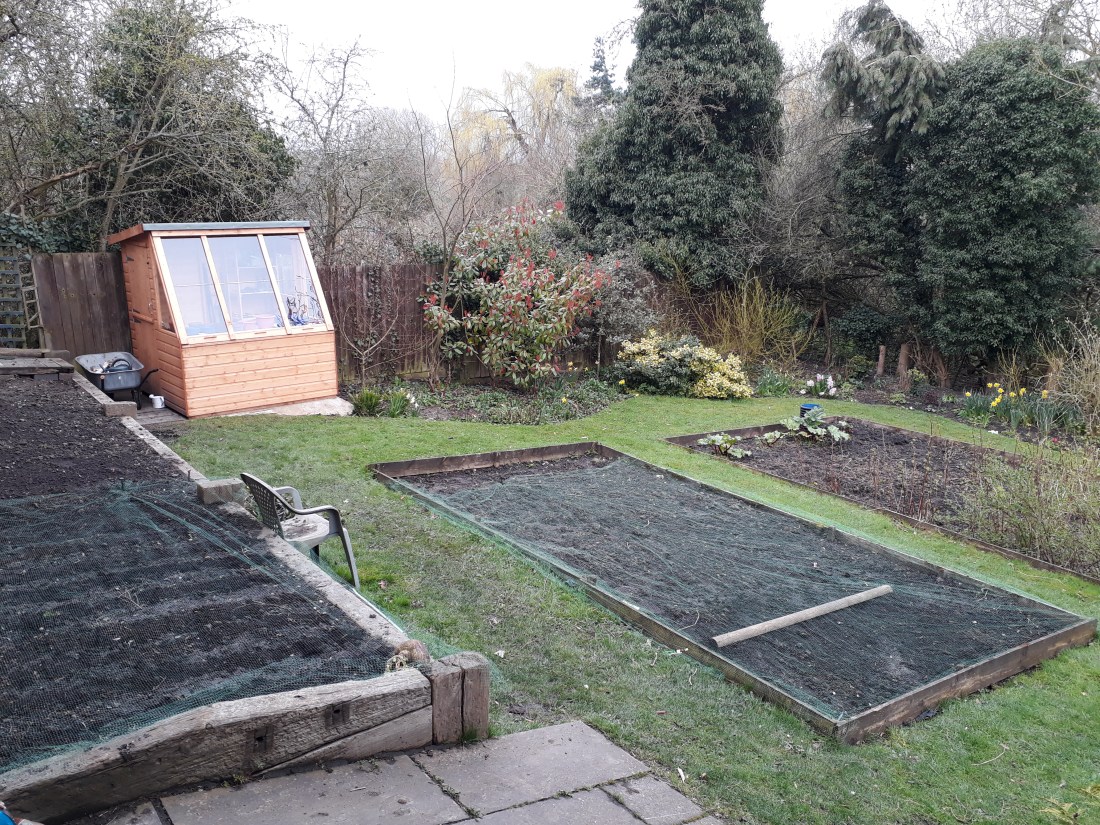
SHED

Just had a potting shed put up in the garden – I was ridiculously excited about it coming!  Also bought myself a little rotovator to dig over the vegetable patches and fruit patch.  We had 2 lovely days last week (Spring?) so I was out there digging and raking and planting!  I’ve put in spinach, carrots, parsnips, beetroot, broad beans, dwarf beans and peas in the ground with cucumber and courgette seeds (hopefully) sprouting in pots on the shelf in front of the shed window.  Rhubarb is going well with black and redcurrants, rapsberries and gooseberries leafing up nicely!  You can almost hear everything growing!  Had to net it all, though, as the lovely hens thought they would just scratch up everything sown!

All this got me to think about vegetarians and how I haven’t really posted much for them.  Also, most of the past Wednesday posts have been what to do with individual vegetables – so this week we are going to put them altogether!

Goulash with Horseradish Dumplings

  • 1 onion
  • 1 carrot
  • 1 large potato (ordinary or sweet)
  • 1 stick of celery
  • 1 garlic clove, crushed
  • 1 teaspoon fresh thyme
  • 1 teaspoon paprika (I like the smoked one but it’s up to you)
  • 1 tin tomatoes – whole or chopped
  • 1 vegetable stock cube
  • 1 tablespoon tomato paste
  • 1 teaspoon chilli sauce (or our favourite secret ingredient, Heinz Fiery Tomato Ketchup)
  • 1 bay leaf
  • 1 red pepper

Chop all the vegetables.  Heat some oil in a saucepan and add the onions, garlic, thyme and paprika and fry gently for 5 minutes.  Add the carrot, potato and celery and fry for another 5 minutes. Add the tomatoes, stock cube, tomato paste and chilli sauce and bay leaf.  Bring to the boil and simmer till the vegetables are soft.  Halve, deseed and slice the pepper and fry in another pan for 6 – 8 minutes till soft and charred. Add to the goulash.

Dumplings

  • 50 grams Self raising flour             25 grams vegetable suet
  • 1 large dessertspoon horseradish sauce (or more to taste)
  • 1 teaspoon tarragon (optional)

Combine all above in a bowl, adding enough water to form a soft dough and shape into small balls

You can now either add the dumplings, cover and simmer gently for about 25 minutes for soft dumplings OR transfer the goulash to an oven dish, add the dumplings and put in the oven at 180oC uncovered for about 20 minutes if you like your dumplings crispy on the top (I do!). To serve a  spoonful of sour cream if you have any and some shredded spring onion to decorate

Sometimes, I add some spinach, shredded kale or cabbage to the goulash with the peppers to give it a little more colour and taste. You could also vary the vegetables to add parsnip, swede, leek – whatever is lurking in the bottom of your fridge!

PS My husband, a true carnivore, loves this so even non vegetarians should enjoy this! And, if you have any left over, you can whizz it all up in a blender (obviously you will have eaten the dumplings so not them) with a little more stock and have some lovely vegetable soup for another day!


Memories are made of this . . .

granny Granny – just engaged to Grandad

Food – the planning, the buying, the preparation, the eating and remembering who with.  It isn’t just feeding to sustain the body – the one thing I’m hoping with this blog is that you will come to love cooking and baking as much as I do and not as a chore.

Thus, the two recipes for today are about memories and the person who gave them to me – granny.  I was brought up with my brother and parents outside Glasgow and each year we went to my mum’s mum in the Lake District for nearly all the school summer holidays.  For 6 years – 1960 to 1966 when granny died – mum, Stewart and I took the steam train from Glasgow to Lancaster and then a little train that stopped at every little station down the coast to Roose (dad came for his 2 weeks in the middle).  A trunk filled with our clothes was sent on ahead and the days counted down.  Granny’s garden was filled with roses (from which my brother and I made “perfume”) and raspberry and blackcurrant bushes to be picked all summer long.  Her garden went out onto a field and we used to spend ages out there catching frogs and toads. One of my main jobs was shelling peas into a chipped enamel bowl – I can still hear the ping as they hit into it.  Next door lived Mr and Mrs Story who owned a bookshop (yes, really!) and Whisky the cat who let me put him in my dolls pram and wheel around the garden.

Granny was a wonderful cook – nothing fancy – meat and potato pies (see an earlier post for the recipe, my dad’s favourite), Lancashire hot pot, crumbles and scones and amazing cakes! She pickled and jammed (no freezers then) and rolled pastry on a marble tabletop (keeping pastry cool when you are handling it is the answer to perfection).  The following recipes are hers – lemon curd and treacle toffee (my mum made it when there was a sore throat in the house so another memory there!)

GRANNY’S LEMON CURD

  • 225 grams sugar
  • 50 grams butter
  • juice and zest of a lemon
  • 2 well beaten eggs

Half fill a pan with water and put on to heat.  Put all the ingredients in a bowl, big enough to put into the pan without the water bubbling over.  Keep on a low heat until everything melts, stirring occasionally. Continue cooking until a spoonful on a cold plate wrinkles when pushed.  Pour into small jars, cool  and keep in the fridge.  Its lovely on hot buttered toast and also as pudding by swirling it into natural yogurt.

GRANNY’S TREACLE TOFFEE

  • 6 tablespoons sugar
  • 100 grams butter
  • 3 tablespoons treacle
  • 1 tablespoon water
  • 2 teaspoons vinegar

Put everything into a saucepan and bring to a boil.  Keep on a rolling boil (I keep a wooden spoon in it so it doesn’t over boil).  It is ready when a small spoonful goes hard when dropped into a bowl of cold water.  Pour into a greased baking tin (BE CAREFUL AS ITS VERY HOT AND WILL BURN YOUR SKIN).  Allow to harden, turn tin over and tap till it drops out.  Keep in a airproof tin or tupperware.

andsMy brother and I – and Whisky the cat

PS I know the above recipes are for more than one but preserves and toffee can’t ever be made for just one sitting!  The lemon curd will keep for up to a month in the fridge particularly if you put it in small jars rather than big one – and it’s up to you how quickly you eat the toffee!  If you want to just make a little you can substitute the tablespoons for dessertspoons and just 50 g butter and 1 teaspoon of vinegar.


Take a couple of lemons . . . .

I don’t know about you but I am so fed up with these grey, wet days.  Our back garden is so constantly flooded that I think my hens may have to take lessons from the visiting ducks!  Anyway, it got me thinking of the summer to come (hopefully) which led me on to the sun and its colour – to lemons!  Little balls of yellow sunshine in themselves.
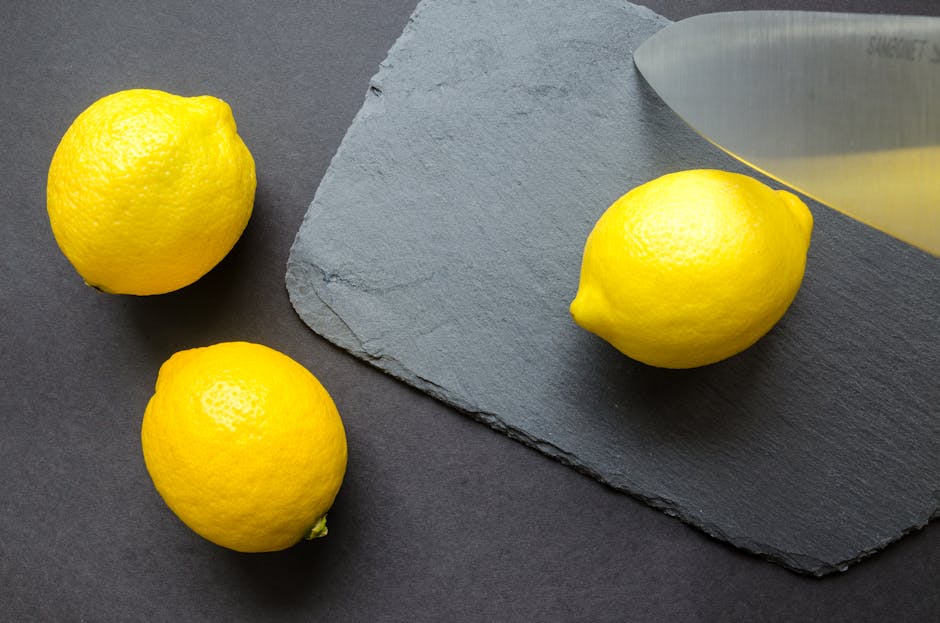
Image result for lemons
Lemon juice is full of vitamin C and can be added to almost anything for a quick zing.  I always start my day with hot water and a lemon slice and could end it having used them in cooking, washing my hair or taken the cut half with salt to clean copper pans!
Look for a smooth, thin skin when shopping – all the supermarkets this morning are selling them for about 30p each.
Sticky chicken thighs in Lemon and Honey
  • 1 dessertspoon black peppercorns, crushed
  • 1 lemon, juice only
  • 1 tablespoon of runny honey
  • dollop grainy mustard
  • 2 garlic cloves, crushed
  • 2 – 3 chicken thighs, bone in and skin on
  • sea salt, to taste
  • 1 – 2 preserved lemons (buy them in a jar from most supermarkets) 
  • handful green olives, pits removed, sliced
  • small handful fresh flat leaf parsley

Preheat the oven at 200C/400F/Gas 6.  Put the crushed peppercorns into a large bowl together with the lemon juice, honey, mustard and garlic and mix well. Place the chicken thighs into a large roasting tin and pour the lemon and honey mixture over the chicken, leaving it to marinate for as long as possible. Sprinkle with sea salt, to taste, then cook in the hot oven for 45 minutes, turning halfway through cooking so that the thighs become lovely and sticky.  Meanwhile, cut the preserved lemons open and remove the soft flesh to leave you with just the skin (discard the flesh). Cut the skin into strips and toss together with the olives and parsley. When the chicken is ready, serve sprinkled with the olive, parsley and preserved lemon mixture. A crisp salad is a nice contrast with some sourdough bread to toast and mop up the lovely juices.

Sticky chicken thighs with lemon and honey

Peach, lemon and mascarpone trifle

  • 2 lemons
  • 400g/14oz caster sugar (yes, I know this seems a lot of sugar but there will be some sugar syrup left over – keep in the fridge or even in plastic container in the fridge)
  • 200ml/7fl oz hot water, from a kettle
  • 4 sponge fingers, broken into pieces
  • 100g/3½oz mascarpone *
  • 1 additional lemon, zest and juice
  • 75ml/2½fl oz double cream
  • 1 tbsp icing sugar, sifted
  • 1 peach, peeled and sliced

Cut one of the lemons into quarters and juice the other one. Place the quartered lemon and the lemon juice, sugar and hot water into a saucepan and bring to the boil. Boil until the mixture is thick and syrupy then remove from the heat and allow to cool. Dip the sponge fingers into the sugar syrup and place in the base of a glass serving dish. Mix the mascarpone, lemon zest and a squeeze of lemon juice from the additional lemon, double cream and icing sugar together. Place a third of the peach slices on top of the sponge finger base and then top with half the cream mix. Place another third of the peach slices on top of the cream and cover with the rest of the cream mix. Decorate with the rest of the peaches.

*mascarpone is a soft Italian cheese that you buy in tubs (the cheapest I have found is in Aldi for 75p).  You can swirl it into pasta, makes great cheesecakes and a main ingredient in tiramisu.  It also makes a great quick dip if you put a dollop of it (possibly the bit left over from above) into a bowl and pour over spicy sweet chilli sauce – serve with sliced pitta bread or crudites to scoop out.

Easter (Comfort) Sunday

For some reason that I’ve never really worked out, lamb (Spring lamb?) is to Easter as turkey is to Christmas.  Obviously, you are never going to cook a whole joint of lamb for yourself (actually, my lovely brother in law would – and does!) but most of us, even two people, wouldn’t so instead I am going to give you a posh lamb stew that you pop in the oven for a couple of hours – giving you plenty of time to go out and roll your eggs down the hill – and, of course, a chocolate dessert.

Lamb Tagine (a Moroccan stew, so called because of the special cooking pot they use – but any casserole dish will do if you haven’t – even a slow cooker) with Harissa Jam

Image result for tagine
  • olive oil
  • 1 red onion
  • 1 – 2 garlic cloves, crushed
  • 1 teaspoon ground ginger
  • 1 teaspoon ground cinnamon (or a stick if you have)
  • 1 teaspoon ground cumin
  • 1 teaspoon ground turmeric
  • 250 grams diced lamb
  • 1 tin chopped tomatoes
  • 300 ml stock
  • 1 teaspoon sugar

Traditional tagines have chopped apricots and/or prunes  and/or dates – it’s up to you whether you want to – it will still taste good!  Add them with the tomatoes.

Heat the oil in a deep pan and fry the onions till beginning to colour. Add the garlic and all the ground spices (if using a cinnamon stick put in last). Season the lamb and add to the pot and cook, stirring, for 5 minutes.  Add the chopped tomatoes and stock and put in the oven at 160 oC for 2 – 3 hours until tender.  If it looks like getting too dry add some more stock. If too “wet” at the end (but the meat is cooked) put it back on top of the stove and cook uncovered till thickened.

Serve with flatbreads or a baked potato, scattering chopped parsley and/or coriander over.  Chopped pistachios and pomegranate seeds will make it look really pretty with the jam served on the side to mix into the lamb.

Harrisa Jam

  • 3 tomatoes       2 -3 cloves of garlic, chopped      1 -2 teaspoons sugar
  • olive oil
  • 1 – 2 teaspoons harrisa paste (you should still have some from the last blog recipe)

Quarter the tomatoes (or half if small) and put in an ovenproof dish.  Scatter the garlic and sugar over and olive oil to coat.  Put in the oven with the lamb and cook until the tomatoes are soft and browning.  Take out and put in a bowl (should be saucelike) and add the harissa to taste.

MOROCCAN-LAMB-TAGINE

Chocolate Mousse (this will give you more than one portion but it’s impossible to half an egg – and it will still be Easter on Monday1)

  • 100 grams dark chocolate
  • 1/4 pint single cream (if you’ve only got double use half cream and half milk
  • 1 egg yolk (put the white in a carton in the freezer – when you have enough you can make meringues or coconut pyramids)

Break up the chocolate into a bowl.  Put the cream into a saucepan and bring to the boil for few seconds. Pour over the chocolate and stir till blended.  Beat in the yolk and pour into a small dish.  Put in the fridge to set and serve with some more grated chocolate and cream!